

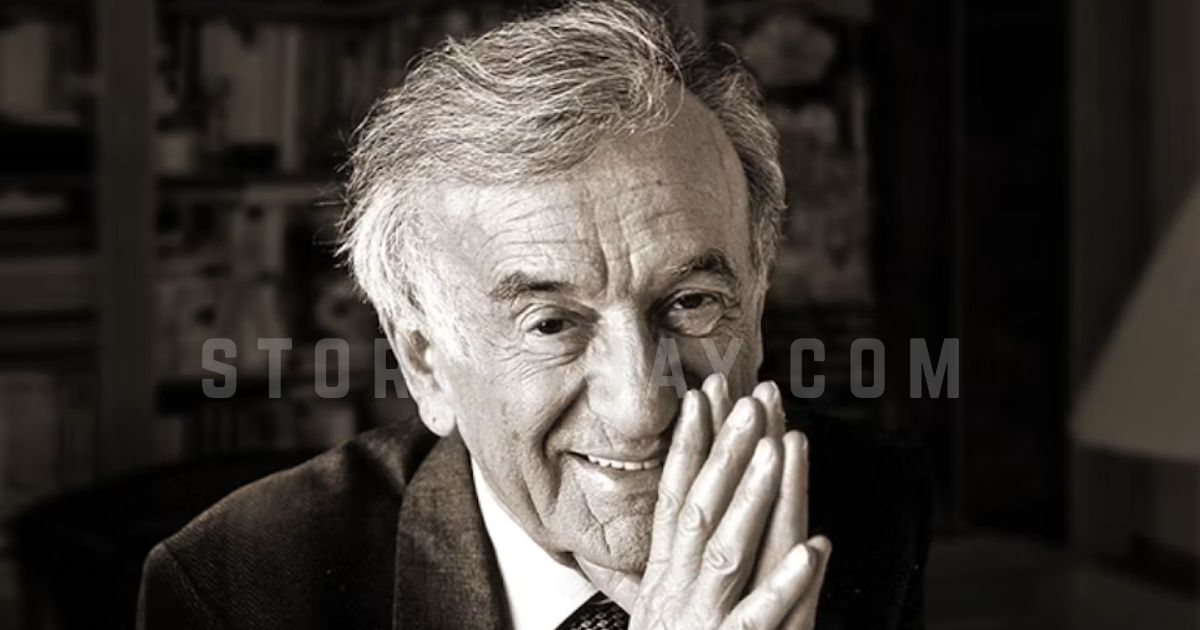
Elie Wiesel’s connection to Romania is an essential part of understanding his life, writing, and legacy. Born in 1928 in Sighet, a town in the historic Maramureș region, Wiesel spent his childhood in a close-knit Jewish community before the Holocaust transformed his life forever.
The story of Elie Wiesel Romania begins with an ordinary childhood shaped by family, Jewish traditions, religious study, and life in Sighet. It later became a story of persecution, deportation, survival, grief, and remembrance. Wiesel’s experiences during the Holocaust eventually influenced his internationally recognized memoir Night and his decades-long work as a writer, educator, and human-rights advocate.
His Romanian origins also provide important historical context. Sighet was part of Romania when Wiesel was born, but the region changed political control during World War II. In 1940, northern Transylvania, including Sighet, came under Hungarian administration. A few years later, the town’s Jewish population faced ghettos, deportations, and destruction under the Holocaust.
Understanding this history helps explain why Sighet remained such an important place in Wiesel’s story long after he left it.
Elie Wiesel’s Romanian Roots
Elie Wiesel was born on September 30, 1928, in Sighet, a town in the Maramureș region. Today, the town is known as Sighetu Marmației and is located in northern Romania.
When discussing Elie Wiesel Romania, it is important to recognize that modern borders do not completely describe the political situation of his childhood. Sighet was part of Romania when Wiesel was born, but the region became part of Hungary in 1940 following territorial changes during World War II.
Wiesel was raised in a Jewish family. His father, Shlomo Wiesel, was active in the local Jewish community, while his mother, Sarah, helped maintain a strong family and religious environment.
As a young boy, Wiesel developed a deep interest in Jewish religious learning. His childhood included studying Jewish texts, participating in religious traditions, and growing up among other members of the Jewish community.
Those experiences later became an important contrast to what happened during the Holocaust.
Before persecution destroyed the community, Sighet was home. It was where Wiesel had family, friends, religious teachers, and memories of everyday life.
Childhood in Sighet
Sighet had a substantial Jewish population before World War II. Jewish residents participated in religious, cultural, educational, and commercial life throughout the town.
The young Wiesel grew up surrounded by this community. His early life was not initially defined by the horrors that would later become associated with his name.
That distinction is important.
The history of Elie Wiesel Romania is sometimes reduced to a story about deportation and survival. However, understanding his childhood requires looking at the world that existed before the Holocaust.
Wiesel’s family had a home, religious traditions, and a strong connection to the community. His father encouraged education and was involved in Jewish affairs. Wiesel himself was particularly interested in religious studies.
The destruction that followed therefore represented much more than the loss of individual lives. It meant the destruction of a community and the disappearance of a way of life that had existed for generations.
This background helps explain the emotional power of Wiesel’s later writing.
When he remembered Sighet, he was not simply remembering a geographical location. He was remembering a world that had been fundamentally changed.
Sighet Before the Holocaust
The history of Sighet’s Jewish community provides important context for Wiesel’s life.
The United States Holocaust Memorial Museum records that thousands of Jews lived in Sighet before the Holocaust. By the early 1940s, Jewish residents represented a significant part of the town’s population.
Synagogues, schools, religious institutions, businesses, and community organizations formed part of Jewish life in the region.
Wiesel’s childhood was connected to this environment.
In 1940, however, northern Transylvania was transferred from Romania to Hungary. This political change had serious consequences for the Jewish population.
Antisemitic policies became increasingly severe. Jewish residents experienced restrictions on their rights and livelihoods, while Jewish men were subjected to forced labor.
The worsening political climate gradually removed Jewish people from ordinary public life.
This progression is significant because the Holocaust did not begin for Wiesel with his arrival at a concentration camp. Persecution developed through a series of restrictions, discriminatory laws, forced labor, violence, confinement, and ultimately deportation.
How War Changed Wiesel’s Childhood
By 1944, the situation had become catastrophic.
Following Nazi Germany’s occupation of Hungary in March 1944, the persecution of Hungarian and Hungarian-controlled Jewish communities accelerated dramatically.
In Sighet, Jewish residents were forced into ghettos. Families who had once lived throughout the town were confined to restricted areas under terrible conditions.
Wiesel was still a teenager.
For someone studying Elie Wiesel Romania, this period is particularly important because it shows how rapidly his childhood environment changed. The town that had once represented family and community became the starting point for deportation.
The United States Holocaust Memorial Museum documents that Jews from Sighet and nearby communities were deported to Auschwitz-Birkenau in May 1944.
Wiesel and his family were among them.
The deportation effectively ended his childhood.
He was 15 years old when he was transported to Auschwitz.
Deportation from Sighet
The deportation of Sighet’s Jewish population was carried out in several transports during May 1944.
The journey was conducted in overcrowded railway cars under horrific conditions. Families were removed from their homes and transported to a concentration and extermination camp system they could scarcely comprehend.
For Wiesel, the journey marked a terrifying separation from everything familiar.
His family had already experienced persecution and confinement. Now they were being taken away from their hometown entirely.
The significance of Sighet in Wiesel’s life is therefore impossible to separate from this moment.
It was his birthplace and childhood home, but it was also the place from which he and thousands of other Jews were deported.
The story illustrates a central fact about the Holocaust: entire communities were uprooted and destroyed, not simply isolated individuals.
For Wiesel, the people who disappeared were not statistics. They were people he knew.
That personal connection became an important element of his later testimony.
Auschwitz and the Loss of His Family
After arriving at Auschwitz-Birkenau, Wiesel and his family were separated.
His mother, Sarah, and his younger sister, Tzipora, were murdered. Wiesel and his father, Shlomo, were selected for forced labor and remained together for much of their imprisonment.
Wiesel and his father were later transferred through the concentration camp system, eventually reaching Buchenwald.
His father died in Buchenwald in January 1945.
Wiesel survived and was liberated from Buchenwald on April 11, 1945.
His two older sisters also survived the Holocaust.
The experience left permanent emotional scars.
For Wiesel, survival was not simply an ending. It created a lifelong responsibility to remember the people who had been murdered and to speak about what had happened.
This is one of the most important connections between his Romanian childhood and his later work. The teenager who had been deported from Sighet eventually became one of the most prominent Holocaust witnesses of the twentieth century.
Life After Liberation
Following liberation, Wiesel spent time in France and eventually studied at the Sorbonne in Paris.
He worked as a journalist and gradually developed a career as a writer.
For several years, however, Wiesel was reluctant to speak publicly about the Holocaust in detail. His experiences were deeply painful, and he struggled with how they could be communicated.
A meeting with French writer François Mauriac influenced his decision to write about what he had experienced.
Wiesel eventually produced the work that became Night, his best-known memoir.
The book describes his experiences as a Jewish teenager during the Holocaust, beginning with his life in Sighet and continuing through his imprisonment in Nazi camps.
Night and the Power of Testimony
Night became one of the most widely read personal accounts of the Holocaust.
Its significance is partly rooted in its personal perspective. Wiesel did not present the Holocaust merely as a series of historical statistics. He described the experience through the eyes of a young person whose family, community, beliefs, and understanding of the world were destroyed.
The Romanian setting at the beginning of his story is therefore particularly meaningful.
Sighet represents the life that existed before the Holocaust. Auschwitz represents the destruction of that world.
The book also explores profound questions about faith, suffering, identity, memory, and human behavior.
Although Night is deeply personal, its influence extends beyond Wiesel’s individual experience. It has been used extensively in Holocaust education and has introduced generations of readers to the human consequences of genocide.
The importance of Elie Wiesel Romania becomes clearer through this perspective. His Romanian childhood was not a minor detail in his biography. It formed the beginning of the personal history that he later transformed into testimony.
Wiesel’s Later Connection With Romania
Wiesel’s relationship with Romania did not end after the Holocaust.
Decades later, he returned to Romania and remained involved in efforts to confront the country’s Holocaust history.
One of the most significant developments came when Wiesel chaired the International Commission on the Holocaust in Romania. The commission examined the history of the Holocaust and Romania’s role in the persecution and murder of Jews and Roma.
Its final report became an important document in discussions about Romania’s wartime history.
Wiesel’s involvement carried particular symbolic significance because he had personally experienced the destruction of the Jewish community in Sighet.
His later public role showed that remembrance was not simply about looking backward. It was also about confronting historical responsibility.
The connection between Elie Wiesel Romania and Holocaust remembrance therefore continued throughout his later life.
His return to Sighet also carried emotional significance. The town had been his childhood home before it became the point of departure for deportation.
Returning as an internationally recognized Holocaust survivor created a powerful connection between the past and the present.
Nobel Peace Prize and Global Recognition
In 1986, Elie Wiesel received the Nobel Peace Prize.
The Nobel Committee recognized his work as a witness to the Holocaust and his efforts to promote peace, human rights, and resistance to indifference.
By this point, Wiesel had become an influential public voice.
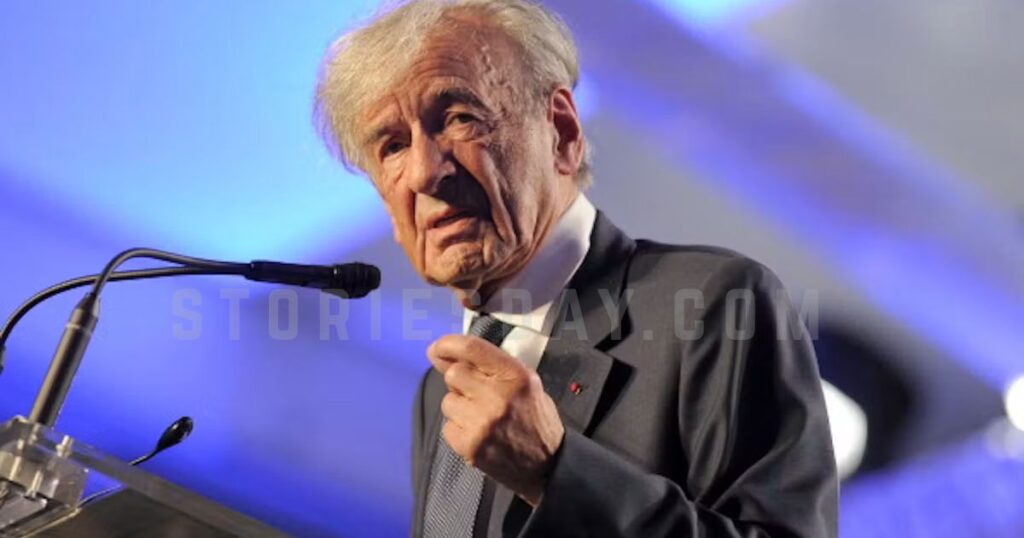
He wrote extensively, lectured internationally, taught, and participated in humanitarian and human-rights initiatives.
His message was broader than Holocaust remembrance alone.
Wiesel frequently emphasized the moral responsibility of individuals to respond when other people are being persecuted or dehumanized.
He warned against indifference because silence can allow injustice to continue.
His international influence transformed his personal history into a broader moral message.
Yet his global reputation never erased his origins.
The boy from Sighet remained central to the story of the man who later became a Nobel Peace Prize laureate.
Why His Romanian Story Still Matters
The Romanian chapter of Wiesel’s life remains important for several reasons.
First, it provides historical context. His story cannot be fully understood without understanding Sighet and the Jewish community that existed there before the Holocaust.
Second, it demonstrates how political changes and antisemitic policies can rapidly transform ordinary life.
Third, it reminds readers that the Holocaust destroyed communities, cultures, families, and traditions as well as individual lives.
Finally, Wiesel’s connection to Romania demonstrates the importance of historical memory.
Remembering Sighet means remembering the people who lived there before the Holocaust. It means recognizing the Jewish community that once flourished in the region and acknowledging what happened to it.
Wiesel’s later work gave those memories an international audience.
His story also illustrates why historical precision matters. Sighet was part of Romania when Wiesel was born, but the town came under Hungarian rule in 1940. The wartime political history of the region is therefore more complicated than simply describing Wiesel as someone who lived in “Romania” throughout his childhood.
That context makes his biography more accurate and helps readers understand the events that led to his deportation.
The Enduring Legacy of Elie Wiesel
Elie Wiesel died on July 2, 2016, at the age of 87.
By the end of his life, he had become one of the world’s best-known Holocaust survivors and advocates for remembrance.
His legacy exists through his books, speeches, educational work, human-rights advocacy, and the institutions connected with his name.
But perhaps the most enduring part of his legacy is the insistence that memory carries responsibility.
Wiesel’s life demonstrates how one person’s testimony can influence the way millions of people understand history.
His story began in Sighet, where he experienced family life, religious learning, and community. It continued through the Holocaust, where he lost his parents’ generation, his younger sister, his home, and much of the world he had known.
He survived and eventually turned that experience into a lifelong commitment to remembering.
The importance of Elie Wiesel Romania ultimately lies in this connection between place and memory.
Sighet was not merely the location of his birth. It was the beginning of the life that the Holocaust attempted to destroy.
His later work ensured that the story of that community would not disappear completely.
Frequently Asked Questions
Where was Elie Wiesel born?
Elie Wiesel was born on September 30, 1928, in Sighet, in the Maramureș region. The town is now known as Sighetu Marmației and is located in northern Romania.
Was Sighet part of Romania when Wiesel was born?
Yes. Sighet was part of Romania when Wiesel was born in 1928. In 1940, the region came under Hungarian rule as a result of territorial changes during World War II.
What happened to Elie Wiesel’s family during the Holocaust?
Wiesel’s mother and younger sister were murdered after the family’s deportation to Auschwitz. His father died in Buchenwald in January 1945. Wiesel and his two older sisters survived.
Why is Sighet important to Elie Wiesel?
Sighet was Wiesel’s birthplace and childhood home. It was also home to a large Jewish community that was devastated during the Holocaust. His memories of Sighet became an important part of his writing.
Did Elie Wiesel return to Romania?
Yes. Wiesel returned to Romania later in life and became involved in efforts to examine and document the Holocaust in Romania. He chaired the International Commission on the Holocaust in Romania.
Conclusion
The story of Elie Wiesel Romania begins with a Jewish boy growing up in Sighet and ends with a Nobel Peace Prize laureate whose voice reached audiences around the world.
Between those two points was an extraordinary and painful journey.
Wiesel experienced the destruction of his childhood community, deportation to Auschwitz, the murder of his mother and younger sister, the death of his father, and imprisonment in Nazi concentration camps. After liberation, he transformed his experiences into literature and eventually into a lifelong campaign for remembrance and human dignity.
His connection to Romania remained an important part of that legacy. Sighet represented the family, faith, culture, and community he knew before the Holocaust, while its destruction represented the devastating consequences of persecution and genocide.
Wiesel’s life reminds us that history is not only about dates and events. It is also about people, places, families, memories, and choices.
By continuing to tell the story of his Romanian childhood and the Jewish community of Sighet, we preserve an important part of Holocaust history and better understand why Wiesel devoted so much of his life to the fight against indifference.
