


McKenna Kindred became the subject of widespread attention after a criminal case involving a relationship with a 17-year-old student while she was working as a teacher at Central Valley High School in Spokane Valley, Washington. The case eventually led to a guilty plea, probation, financial penalties and a requirement to register as a sex offender.
The story has continued to attract interest because the consequences extended beyond the criminal proceedings. Her teaching career ended, a civil lawsuit was filed against the Central Valley School District, and later reporting has focused on her life after sentencing.
Because information about this case varies considerably across online sources, it is important to distinguish confirmed court and government records from claims made by tabloids or secondary websites. This article focuses primarily on established reporting and documented legal information.
Who Is McKenna Kindred?
McKenna Aileen Kindred is a former Washington high school teacher who worked at Central Valley High School in Spokane Valley. She was 25 when she pleaded guilty in March 2024 to amended charges involving sexual misconduct with a minor and communication with a minor for immoral purposes.
The case centered on her relationship with a 17-year-old student. According to court documents reported by established news organizations, the relationship involved communications through Instagram and later sexual contact.
The allegations became public in December 2022 after students reportedly raised concerns with school officials. Kindred was subsequently placed on administrative leave, and she resigned from the school district in 2023.
Her story is sometimes presented online as a celebrity-style biography. However, she is primarily known because of the legal and professional consequences surrounding the case rather than because of a public entertainment career.
That distinction is useful when evaluating information about her age, family, employment history and current life. Some details circulating online come from tabloids or social-media-based reporting and are not necessarily supported by official records.
Her Teaching Career
Before the controversy, Kindred worked as a teacher at Central Valley High School, part of the Central Valley School District in Washington.
The school district said she was hired in August 2021 and that its hiring process had been followed. After allegations involving a student surfaced, the district placed her on administrative leave. She later submitted her resignation in April 2023.
Her own statement during sentencing made clear that the consequences affected her professional life significantly. She told the court that she had lost her career, friendships and freedoms and expressed remorse for the harm caused by her actions.
The end of her teaching career became one of the most significant consequences associated with the case.
It is also important to distinguish between losing a particular teaching position and the broader question of professional licensing. Later proceedings involving an Idaho teaching certificate provided additional information about her ability to continue working in education.
How the Case Came to Light
The investigation began after concerns were raised at the school in December 2022.
According to reporting based on court documents, classmates of the student told school officials about inappropriate communications between him and Kindred. The communications reportedly included Instagram messages.
Kindred herself had reportedly contacted school administration after accusations appeared on social media, initially denying that she was involved in a sexual relationship with a student. Investigators later interviewed the student and examined the allegations.
Court documents reported that the student told investigators he had begun communicating with Kindred in June 2022. The investigation ultimately led to her arrest in 2022. She remained free on bond while the case proceeded through the courts.
The circumstances surrounding the case attracted particular attention because of the teacher’s position of authority.
Although the student was 17, Washington law and professional standards impose specific restrictions on sexual relationships between educators and students. A teacher’s professional authority creates responsibilities that go beyond the ordinary question of a person’s age.
The Criminal Charges
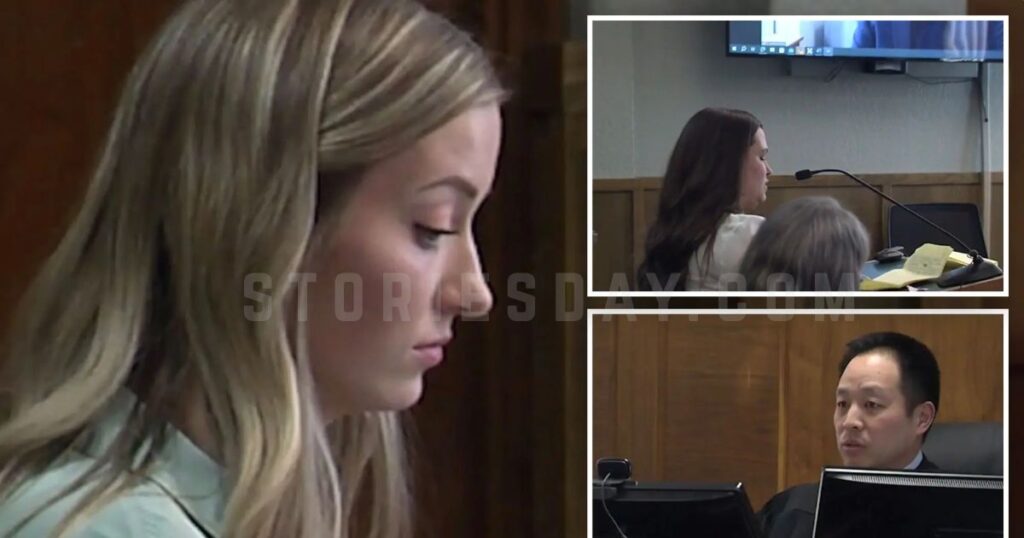
The charges changed as the case moved through the court system.
Kindred initially faced a first-degree sexual misconduct charge, a felony. According to USA TODAY’s reporting based on court records, the case was eventually resolved through a plea agreement involving reduced misdemeanor charges.
On March 28, 2024, she pleaded guilty to second-degree sexual misconduct with a minor and communication with a minor for immoral purposes. The Spokesman-Review reported that both were gross misdemeanors under the amended charges.
This distinction matters when describing the case.
The initial accusations and charges should not be treated as identical to the offenses to which she ultimately pleaded guilty. A factual account should make clear that the final outcome resulted from an agreement that reduced the charges.
The plea also meant the case did not proceed to a full trial. Instead, the court accepted the agreement and moved to sentencing.
The Plea Agreement and Sentencing
One of the most widely discussed parts of the case was the decision not to impose jail time.
Judge Dean Chuang of Spokane County Superior Court sentenced Kindred to two years of probation. She was also ordered to pay $700 in fines and fees and register as a sex offender for 10 years.
The prosecution and defense had recommended a sentence without incarceration as part of the resolution.
That outcome generated significant public attention because the case involved a teacher and a student. Some people questioned whether the sentence adequately reflected the seriousness of the conduct, while the court ultimately imposed the sentence permitted under the plea agreement and applicable law.
During the hearing, Kindred apologized to the victim and his family. She said she was deeply ashamed and acknowledged that her actions had resulted in major personal and professional consequences.
The victim’s mother also addressed the court and described the consequences for her son and family. Her statement emphasized the lasting emotional, social and academic impact she believed the relationship had caused.
The sentencing therefore involved two very different perspectives: Kindred’s acceptance of responsibility and the victim family’s description of the harm they believed resulted from the relationship.
What Happened to Her Teaching Career?
Her career in Washington education ended after the allegations became public.
Central Valley School District placed Kindred on administrative leave after learning about the allegations. She subsequently resigned from her position in 2023.
The consequences later extended into educator licensing.
An official Idaho Professional Standards Commission record is particularly important because it provides government documentation rather than relying on secondary reporting. The record concerns the voluntary surrender of an Idaho educator certificate following the Washington criminal case.
This means that later claims about her professional future should be considered alongside the official licensing record.
The available evidence does not support presenting her as an active classroom teacher following the case. Her former position ended, and the later licensing action further affected her ability to pursue teaching.
For readers researching McKenna Kindred, this professional timeline is more useful than unverified claims about her current employment.
The Civil Lawsuit Against the School District
The criminal case was followed by a separate civil lawsuit involving the Central Valley School District.
In April 2024, a lawsuit was filed on behalf of the student against the district. The complaint alleged that the school district failed to protect the student and failed to take appropriate measures regarding the teacher’s conduct.
The lawsuit alleged that Kindred used her position of authority and that the district should have done more to protect the student.
However, allegations in a civil complaint should not automatically be described as proven facts. A lawsuit represents the claims of the parties who file it, while a court judgment is a separate matter.
The district responded that it takes student safety seriously and said it placed Kindred on administrative leave once it became aware of the allegations. It also stated that its hiring processes had been followed.
This creates an important distinction between the criminal case and the civil litigation.
The criminal proceeding addressed Kindred’s conduct and resulted in a guilty plea. The civil lawsuit instead raised questions about the responsibilities and potential liability of the school district.
Later Developments and Current Status
Interest in McKenna Kindred did not end with the 2024 sentencing.
In January 2026, IBTimes UK published a retrospective report examining the case and discussing developments after the original sentencing. The report said that Kindred completed her probation and later surrendered her teaching license.
Other 2026 reporting has focused on her move to Idaho and her personal circumstances after leaving Washington. These reports contain additional claims about her residence and family life, but those details should be treated more cautiously than information documented in court or government records.
The most reliable picture is therefore relatively straightforward.
She no longer works in the teaching position that originally brought her public attention. Her criminal case resulted in probation rather than incarceration, and her professional status in education was subsequently affected by the surrender of her Idaho educator certificate.
Claims about her private life, residence, finances or future plans should be evaluated individually rather than assumed to be established simply because they appear in a media report.
Why the Case Received So Much Attention
Several factors explain why the story continued to attract readers long after the original investigation.
The teacher-student relationship
The central issue involved a person in a position of educational authority and a student. That dynamic made the case especially significant for parents, educators and school communities.
The reduced charges
The initial felony charge was eventually replaced by reduced misdemeanor charges through a plea agreement. That change was a major reason the sentencing outcome received attention.
The lack of jail time
The court imposed probation, fines and registration requirements rather than incarceration. That outcome generated strong public reaction and became a major focus of later coverage.
The effect on the student’s life
The victim’s family described substantial emotional, social and academic consequences. Those statements added another dimension to the story beyond the criminal charges themselves.
The school district lawsuit
The subsequent civil action expanded the discussion from individual responsibility to questions about institutional safeguards and student protection.
The continuing professional consequences
The later licensing developments gave the story a longer timeline. The consequences were not limited to the criminal sentence but also affected her career in education.
Frequently Asked Questions
Who is McKenna Kindred?
McKenna Kindred is a former Central Valley High School teacher in Spokane Valley, Washington. She became known publicly after a criminal case involving a 17-year-old student.
What charges did McKenna Kindred plead guilty to?
She pleaded guilty in March 2024 to second-degree sexual misconduct with a minor and communication with a minor for immoral purposes. The charges had been reduced from the more serious charges she originally faced.
Did McKenna Kindred go to prison?
No. The court sentenced her to two years of probation, $700 in fines and fees, and 10 years of sex-offender registration.
What happened to her teaching career?
She was placed on administrative leave after the allegations became known and later resigned from Central Valley High School. Her subsequent educator licensing status was also affected.
What is the latest confirmed information?
The case continued to receive media attention in 2026, particularly regarding her life after sentencing and her professional status. However, official records and established reporting provide a more reliable basis for understanding her current situation than unsupported online claims.
Conclusion
The case surrounding McKenna Kindred is a complicated story involving education, criminal law, professional ethics and questions about institutional responsibility.
She worked as a teacher at Central Valley High School before allegations involving a 17-year-old student emerged in 2022. The school placed her on administrative leave, and she later resigned. In March 2024, she pleaded guilty to amended charges of second-degree sexual misconduct with a minor and communication with a minor for immoral purposes.
The sentence included two years of probation, $700 in fines and fees, and 10 years of sex-offender registration. She did not receive a jail sentence.
The aftermath also included a civil lawsuit against the Central Valley School District and professional licensing consequences. Later reporting has examined her life after leaving Washington and the education profession.
For anyone searching for accurate information about McKenna Kindred, the most responsible approach is to separate documented facts from speculation. Court records, official licensing documents and established local reporting provide the strongest foundation for understanding the case.
The story also demonstrates why professional boundaries between educators and students matter. Regardless of the attention surrounding the individual involved, the broader issues of student safety, educator responsibility and institutional oversight remain the most important lessons from the case.
