


Few composers have shaped the history of opera as profoundly as Giuseppe Verdi. His works transformed nineteenth-century Italian opera, elevated dramatic storytelling on the musical stage, and produced some of the most enduring masterpieces in classical music. More than a century after his death, Verdi’s operas remain central to the repertoire of leading opera houses, attracting audiences with their emotional intensity, memorable melodies, and deeply human characters.
What makes Verdi’s music remarkable is not simply its beauty. His operas explore universal themes—love, power, jealousy, sacrifice, freedom, and redemption—with a dramatic clarity that continues to resonate across cultures and generations. Whether set in ancient Egypt, Renaissance Italy, or Shakespearean England, his stories reveal timeless truths about human nature.
Table of Contents
- Giuseppe Verdi and the Rise of Italian Opera
- How Verdi Changed Opera Forever
- The Defining Characteristics of Verdi’s Music
- The Greatest Verdi Operas
- Verdi’s Relationship with Shakespeare
- Historical and Political Themes in His Works
- Which Verdi Operas Should You Hear First?
- Verdi’s Lasting Legacy
- Conclusion
- Frequently Asked Questions
Giuseppe Verdi and the Rise of Italian Opera
Born in 1813 in northern Italy, Giuseppe Verdi emerged during a period of political change and artistic evolution. Opera was already popular throughout Europe, but many works of the era emphasized vocal display over dramatic depth. Verdi believed music should serve the story and reveal the emotional lives of characters.
His early success came with Nabucco in 1842. The opera established him as a major composer and introduced audiences to the dramatic power that would become his signature. Its famous chorus, “Va, Pensiero,” resonated strongly with Italians living during a period of national unification and political struggle.
From that moment onward, Verdi became one of the most influential cultural figures in Italy. His operas were not only artistic achievements but also reflections of the social and political currents of his time.
How Verdi Changed Opera Forever
Verdi inherited traditions from earlier Italian composers, yet he pushed the art form in new directions.
Rather than treating opera as a sequence of loosely connected musical numbers, he focused on creating dramatic continuity. Every aria, duet, ensemble, and chorus contributed to character development and narrative momentum.
His innovations included:
- Greater psychological realism
- Stronger integration of music and drama
- More complex characters
- Rich orchestral writing
- Increased emotional intensity
These developments helped move opera toward a more modern form of storytelling.
Audiences did not merely admire Verdi’s music; they became emotionally invested in the lives of his characters. This connection remains one of the reasons his works continue to thrive on contemporary stages.
The Defining Characteristics of Verdi’s Music
The enduring appeal of Verdi’s operas lies in a combination of artistic qualities that distinguish his work from that of many contemporaries.
Unforgettable Melodies
Verdi possessed an extraordinary gift for melody. Many of his themes remain recognizable even to people with little familiarity with opera.
Melodies such as “La Donna è Mobile” from Rigoletto and “Libiamo” from La Traviata have become part of global musical culture.
Emotional Directness
His music communicates feelings with remarkable clarity. Whether expressing heartbreak, triumph, despair, or hope, Verdi’s compositions speak directly to listeners.
Powerful Characterization
Verdi created some of opera’s most memorable characters. They are rarely simple heroes or villains. Instead, they struggle with moral dilemmas, personal weaknesses, and conflicting desires.
Dramatic Momentum
His operas rarely feel static. Scenes unfold with a sense of urgency that keeps audiences engaged from beginning to end.
The Greatest Verdi Operas
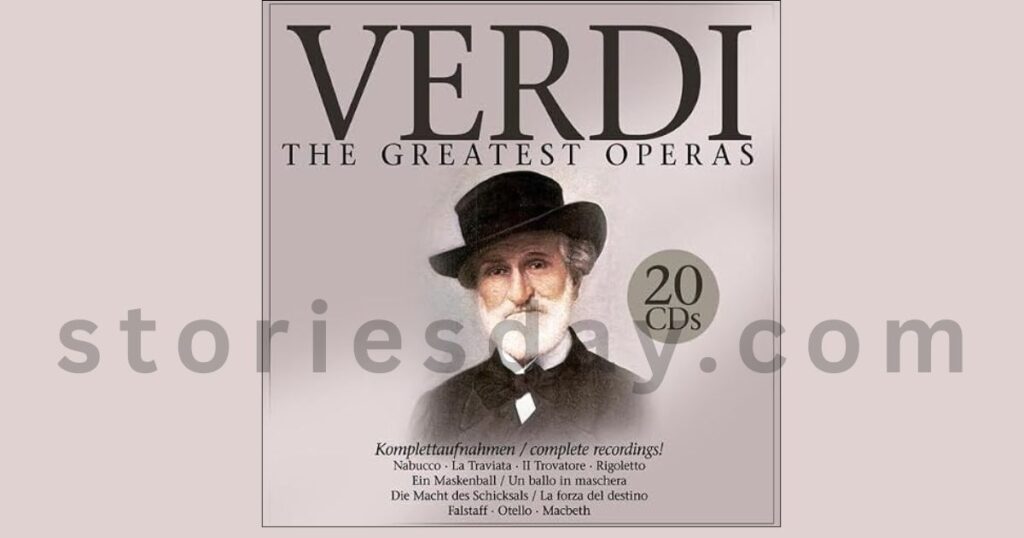
While every listener develops personal favorites, several works consistently rank among Verdi’s most important achievements.
Rigoletto
Premiered in 1851, Rigoletto marked a turning point in Verdi’s career.
The story follows a court jester whose attempts to protect his daughter lead to devastating consequences. The opera combines intense drama with extraordinary music, creating a powerful portrait of love, revenge, and fate.
Its emotional complexity and unforgettable score have made it one of the most frequently performed operas in the world.
La Traviata
Based on Alexandre Dumas’ novel La Dame aux Camélias, La Traviata tells the story of Violetta Valéry, a courtesan who sacrifices her happiness for the man she loves.
What distinguishes this opera is its emotional honesty. Rather than focusing on kings, warriors, or mythical figures, Verdi places an ordinary human relationship at the center of the drama.
The result is a work of remarkable intimacy and emotional power.
Il Trovatore
Filled with revenge, family secrets, and tragic misunderstandings, Il Trovatore delivers some of Verdi’s most dramatic music.
The opera’s complex plot is matched by a score that balances lyrical beauty with explosive intensity. Its famous “Anvil Chorus” remains one of the most recognizable passages in opera.
Nabucco
This early masterpiece established Verdi as a major composer.
Set during the Babylonian captivity of the Jewish people, the opera combines grand spectacle with deeply emotional moments. The chorus “Va, Pensiero” became particularly significant because many listeners interpreted it as a symbol of national identity and longing for freedom.
Aida
Commissioned for the opening of the Khedivial Opera House in Cairo, Aida blends intimate human drama with large-scale spectacle.
The story centers on a love triangle involving an Ethiopian princess, an Egyptian military commander, and the daughter of the Pharaoh.
Despite its famous triumphal scenes and grand visual possibilities, the opera’s true strength lies in its emotional depth.
Otello
Inspired by Shakespeare’s tragedy, Otello represents the culmination of Verdi’s mature style.
The opera explores jealousy, manipulation, and destruction with extraordinary psychological insight. From its storm-filled opening to its devastating conclusion, every scene contributes to an overwhelming dramatic experience.
Many critics regard it as one of the greatest operas ever composed.
Falstaff
Verdi’s final opera revealed a different side of his artistic personality.
After decades of creating tragic masterpieces, he ended his career with a comedy based on Shakespeare’s Falstaff. The work sparkles with wit, energy, and musical sophistication.
Its success demonstrated that even in his eighties, Verdi remained creatively adventurous.
Verdi’s Relationship with Shakespeare
Few literary figures influenced Verdi as deeply as William Shakespeare.
The composer admired Shakespeare’s understanding of human nature and repeatedly turned to his plays for inspiration.
Three operas emerged directly from this fascination:
- Macbeth
- Otello
- Falstaff
Each adaptation reflects a different stage of Verdi’s artistic development.
Macbeth showcases his early experimentation with dramatic atmosphere. Otello demonstrates mature psychological complexity. Falstaff reveals a playful confidence that only a master composer could achieve.
These works rank among the finest Shakespearean adaptations in any artistic medium.
Historical and Political Themes in His Works
Many of Verdi’s operas explore issues extending beyond personal relationships.
Questions of power, freedom, justice, and national identity frequently appear throughout his work. During Italy’s movement toward unification, Verdi became a symbol of cultural pride and political aspiration.
Although he rarely wrote explicitly political operas, audiences often interpreted his stories through the lens of contemporary events.
His ability to combine personal drama with broader social concerns helped give his works lasting relevance.
Which Verdi Operas Should You Hear First?
For newcomers, selecting a starting point can feel overwhelming.
These works provide an excellent introduction:
La Traviata
Its emotional story and beautiful melodies make it highly accessible.
Rigoletto
A compelling blend of drama, memorable music, and strong characterization.
Aida
Ideal for those who enjoy grand productions and sweeping narratives.
Nabucco
An important historical milestone with powerful choral writing.
Otello
Perfect for listeners interested in Shakespeare and dramatic intensity.
Each opera highlights different aspects of Verdi’s genius while remaining approachable for first-time audiences.
Verdi’s Lasting Legacy
Verdi’s influence extends far beyond the opera house.
His works continue to inspire performers, conductors, composers, filmmakers, and scholars. Opera companies regularly stage his masterpieces because they consistently attract audiences and offer performers exceptional artistic opportunities.
More importantly, his music remains emotionally relevant. The struggles faced by his characters—love, ambition, sacrifice, grief, and hope—are experiences that transcend historical periods and cultural boundaries.
That universality explains why Verdi’s operas continue to speak so powerfully to modern audiences.
His achievement was not merely composing beautiful music. He created dramatic works capable of revealing the complexity of human experience with honesty, compassion, and extraordinary artistic skill.
Conclusion
Giuseppe Verdi transformed opera into a more emotionally compelling and dramatically sophisticated art form. Through works such as Rigoletto, La Traviata, Aida, Nabucco, Otello, and Falstaff, he created a body of music that continues to define the operatic repertoire.
His genius lay in his ability to unite memorable melodies with profound human drama. The result is a collection of masterpieces that remain as moving and relevant today as they were when first performed.
For anyone interested in classical music, theatre, or cultural history, exploring Verdi’s operas offers a rewarding journey into the work of one of the greatest composers who ever lived.
Frequently Asked Questions
What is Giuseppe Verdi’s most famous opera?
La Traviata is generally considered his most popular opera because of its emotional story, accessible music, and enduring global appeal.
How many operas did Verdi compose?
Verdi composed approximately 28 operas during a career that spanned more than fifty years.
Why is Verdi important to opera history?
He transformed Italian opera by strengthening dramatic storytelling, deepening character development, and integrating music more closely with the narrative.
Which Verdi opera is best for beginners?
La Traviata is often recommended because its story is easy to follow and its music contains some of Verdi’s most beautiful melodies.
Did Verdi write any operas based on Shakespeare?
Yes. His Shakespeare-inspired operas include Macbeth, Otello, and Falstaff.
