

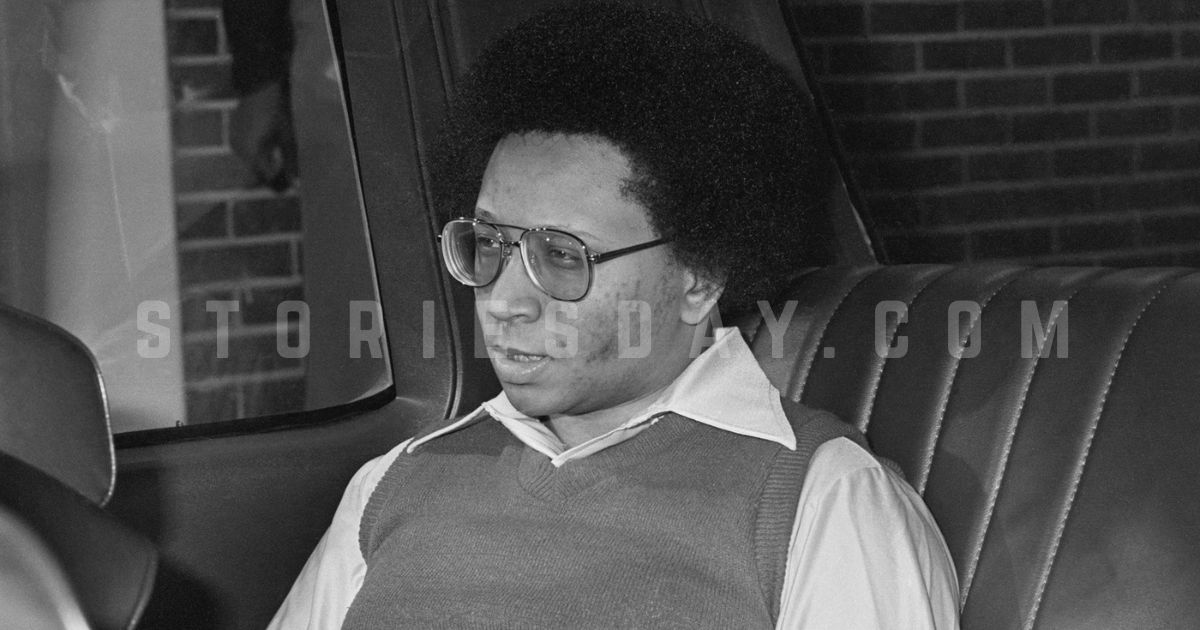
Wayne Williams is one of the most controversial names associated with the Atlanta Child Murders, a devastating series of killings and disappearances that shook Atlanta, Georgia, between 1979 and 1981. His arrest in 1981 brought a major turning point to the investigation, but it did not answer every question surrounding the deaths.
Williams was ultimately convicted of murdering Nathaniel Cater and Jimmy Ray Payne and received two life sentences. Investigators later said evidence connected him to numerous other deaths examined during the Atlanta investigation. However, he was not convicted of those additional killings, an important distinction when discussing his place in the case.
The story involves a lengthy police investigation, surveillance along the Chattahoochee River, forensic evidence, disputed interpretations, and questions that have remained part of public discussion for decades.
Who Was Wayne Williams?
Wayne Bertram Williams was born in Atlanta in 1958. Before his name became associated with one of the most notorious criminal investigations in American history, he was interested in music, radio, and communications.
He worked in areas connected with photography and entertainment and reportedly hoped to establish himself in the music industry. His interests and contacts later became relevant to investigators examining his movements and relationships.
By the early 1980s, however, Williams had become the focus of an investigation into a series of killings involving young Black victims in Atlanta.
The case surrounding Wayne Williams is sometimes presented as though his conviction automatically resolved every Atlanta Child Murders case. The historical record is more complicated.
He was convicted of two murders. Authorities subsequently associated him with additional deaths, but those associations did not result in convictions for each individual case.
That distinction is essential to understanding both the legal case and the continuing debate surrounding it.
The Atlanta Child Murders Begin
The Atlanta Child Murders emerged as a major crisis in 1979.
Children and young people began disappearing from Atlanta neighborhoods, and several were later found dead. As the number of victims increased, fear spread throughout the city.
Many victims were Black children, teenagers, and young adults. Families became increasingly concerned about allowing their children to travel alone, while community organizations and volunteers became involved in searches and neighborhood patrols.
The disappearances were particularly frightening because investigators initially struggled to determine whether the cases were connected.
Some victims disappeared from ordinary public places. Others were discovered in locations away from where they were last seen. The circumstances varied, making it difficult to identify a single clear pattern.
As the investigation expanded, authorities began examining whether a single offender could be responsible for multiple killings.
The FBI eventually became involved, bringing federal investigative resources, forensic specialists, and behavioral expertise to the case.
Why the FBI Became Involved
By 1980, the growing number of cases had become too significant for Atlanta authorities to investigate alone.
The FBI began assisting local investigators and established a major investigative effort. According to the Bureau’s historical account, investigators examined approximately 29 deaths associated with the Atlanta Child Murders investigation.
The FBI’s involvement included forensic analysis and behavioral profiling.
Investigators attempted to identify common characteristics among victims and determine whether their deaths were connected. They also examined where victims disappeared, where bodies were recovered, and whether there were geographic patterns that could reveal where an offender might operate.
The investigation attracted intense public attention.
Parents were frightened, community leaders demanded answers, and racial tensions increased as the number of victims grew.
The pressure on investigators intensified with every new disappearance.
Eventually, a geographic clue helped change the direction of the investigation.
The Chattahoochee River Surveillance
In the spring of 1981, investigators noticed that several bodies had been discovered in or near the Chattahoochee River.
The river became an important part of the investigation because authorities suspected that someone might be using the water to dispose of victims.
That led investigators to focus on bridges crossing the river.
Law-enforcement teams began monitoring bridges in an effort to identify anyone who might be dumping a body.
The FBI has reported that surveillance teams were placed at 14 bridges crossing the Chattahoochee River.
The strategy required patience. Officers had to monitor traffic and wait for unusual activity, often without knowing exactly what they were looking for.
Then came the event that would transform the investigation.
The May 1981 Bridge Encounter
On May 22, 1981, surveillance officers heard a loud splash from the Chattahoochee River.
They observed a vehicle near the bridge and followed it after it left the area.
The driver was Wayne Williams.
Police stopped and questioned him, but they did not immediately arrest him. At that stage, investigators did not have sufficient evidence to charge him with murder.
Williams was released.
Two days later, investigators recovered the body of Nathaniel Cater downstream.
The timing immediately attracted attention.
Cater’s death became a crucial part of the investigation, and investigators returned their focus to Williams.
The bridge encounter itself did not prove that Williams had killed Cater. But investigators now had a suspect who had been near the river shortly before Cater’s body was discovered.
The case subsequently turned toward forensic evidence and Williams’s connections to the victims.
The Evidence Against Wayne Williams
The prosecution’s case against Wayne Williams was largely circumstantial but included extensive forensic evidence.
Hair and fiber comparisons became particularly important.
Investigators examined fibers recovered from victims and compared them with materials found in Williams’s home, vehicle, and other environments associated with him.
Fiber evidence
Fiber evidence formed a significant part of the prosecution’s case.
The basic reasoning was that certain fibers found on victims could potentially correspond to materials from Williams’s surroundings.
Prosecutors presented combinations of fibers as evidence that helped establish an association between Williams and victims.
However, the defense challenged the interpretation of this evidence.
This is an important part of the historical record because fiber evidence is not equivalent to a fingerprint identifying a person with absolute certainty. Its significance depends on the type of fiber, its characteristics, how common it is, where it was recovered, and how the comparison was conducted.
The FBI’s archival records show that defense attorneys challenged aspects of the prosecution’s fiber evidence during the trial.
Hair evidence
Hair comparisons were also presented during the trial.
Investigators examined hairs associated with victims and compared them with samples connected to Williams.
As with fibers, hair comparison was considered useful forensic evidence at the time, but its interpretation required expert analysis.
The FBI later summarized the trial evidence as involving both hair and fiber analysis along with witness testimony.
Witness testimony
The prosecution also relied on witnesses to establish parts of its case.
The defense attempted to challenge witness credibility and the interpretation of testimony.
The trial therefore involved more than a single piece of forensic evidence. Prosecutors presented a collection of circumstances that they argued pointed toward Williams.
Williams’s presence near the river
The bridge encounter was another major element.
Williams had been near the river shortly before Cater’s body was found downstream.
Again, the encounter alone did not establish guilt. Its significance came from its relationship to the larger body of evidence developed by investigators.
The Arrest

After investigators continued examining the case, Williams was arrested on June 21, 1981.
The arrest followed weeks of investigation after the bridge encounter and the discovery of Cater’s body.
Authorities searched Williams’s residence and vehicle and continued collecting forensic evidence.
The investigation had now moved beyond a suspicious encounter. Police believed they had developed a substantial evidentiary case against him.
The next major stage would be the courtroom.
The Trial and Conviction
The trial focused on two murders: Nathaniel Cater and Jimmy Ray Payne.
This is one of the most important facts to remember when discussing Wayne Williams.
Although investigators later connected him to additional deaths, the criminal trial resulted in convictions for these two murders.
Williams was convicted in February 1982 and received two life sentences.
The prosecution presented forensic evidence, witness testimony, and circumstantial evidence designed to demonstrate that Williams was responsible for the killings.
The defense challenged the reliability and interpretation of evidence presented by prosecutors.
FBI archival records from the case show that defense arguments included challenges involving fiber evidence, witnesses, police investigative procedures, and other aspects of the prosecution’s case.
Ultimately, the jury accepted the prosecution’s arguments and found Williams guilty.
The convictions became the legal endpoint for the two murders charged at trial.
But the broader Atlanta investigation remained much larger.
What About the Other Victims?
One of the most misunderstood aspects of the case concerns the number of deaths associated with Williams.
The Atlanta Child Murders investigation examined approximately 29 deaths.
After Williams’s conviction, investigators concluded that evidence connected him to many of the additional cases.
The FBI has stated that authorities linked Williams to 20 additional deaths beyond the two murders for which he was convicted.
That means investigators believed the evidence connected him to a total of 22 cases.
But it would be inaccurate to say that Williams was legally convicted of 22 murders.
He was convicted of two.
The distinction between conviction, investigative attribution, and suspicion is especially important in a case that continues to attract public attention.
Some families and researchers have also questioned whether every death investigated as part of the Atlanta Child Murders was necessarily committed by the same person.
Those questions have helped keep the case alive in documentaries, books, news coverage, and historical investigations.
Why the Case Remains Controversial
The story of Wayne Williams remains controversial for several reasons.
First, the number of victims associated with the wider investigation is much larger than the number of murders for which Williams was convicted.
Second, the case depended heavily on forensic techniques that were widely used in the early 1980s but are viewed differently today.
Third, there has been continuing debate about whether the Atlanta Child Murders represented one offender, multiple offenders, or a combination of related and unrelated crimes.
The FBI’s historical account does not suggest that every death during the period necessarily had identical circumstances. Instead, investigators developed connections among many of the cases based on evidence available to them.
The question of forensic evidence
Modern readers should be careful when interpreting historical forensic evidence.
Hair and fiber comparisons can provide useful investigative information, but they do not necessarily provide the same degree of individual identification associated with DNA profiling.
The standards and technologies surrounding forensic science have also changed considerably since the early 1980s.
That does not automatically invalidate the evidence used against Williams. Instead, it means the evidence should be understood within the scientific and legal context of the period.
The question of additional murders
Another unresolved issue concerns the additional deaths attributed to Williams by investigators.
Authorities believed there was enough evidence to associate him with numerous cases, but those cases did not result in separate convictions.
That difference matters because a historical article should distinguish between what investigators believed and what a court established beyond the applicable legal standard.
Where Wayne Williams Is Today

Williams remains incarcerated in Georgia, serving life sentences for the two murders for which he was convicted.
He has maintained his innocence regarding the killings.
His name continues to appear in discussions about the Atlanta Child Murders because investigators connected him to numerous additional deaths and because the case remains one of the most extensively examined criminal investigations in Atlanta’s history.
The FBI has preserved extensive archival material concerning the investigation, including records relating to the evidence, surveillance operation, interviews, and trial.
Those records provide an important resource for understanding how investigators developed their case.
They also show why the investigation cannot be reduced to a single dramatic moment at a bridge.
The bridge encounter was important, but it was followed by weeks of evidence gathering, forensic examination, interviews, searches, and courtroom arguments.
The Human Cost of the Atlanta Child Murders
Any discussion of Wayne Williams should ultimately return to the victims.
The Atlanta Child Murders were not simply a famous criminal case. They were a devastating series of events that affected families, neighborhoods, schools, churches, and an entire city.
Many families spent years searching for answers about missing children and loved ones.
The fear generated by the disappearances also changed everyday life in Atlanta. Parents became more cautious, community members organized searches and patrols, and pressure on law enforcement grew as the cases accumulated.
The investigation eventually produced a conviction, but a conviction could not undo the losses experienced by families.
That is why responsible coverage should avoid turning the case into nothing more than a mystery surrounding a suspect.
The victims deserve to remain at the center of the historical record.
Why the Case Still Matters
The Atlanta investigation remains significant because it illustrates the challenges involved in investigating a large number of violent crimes over an extended period.
It also demonstrates how investigations can evolve.
At first, authorities were dealing with individual disappearances and murders.
Then patterns emerged.
The FBI became involved.
Behavioral analysis and forensic science were brought into the investigation.
The Chattahoochee River became a strategic focus.
Bridge surveillance produced a major breakthrough.
Forensic evidence then became central to a prosecution.
The case also demonstrates why historical accuracy matters.
It is easy to say that Williams was responsible for all of the Atlanta Child Murders. The legal record is more precise.
He was convicted of two murders.
Investigators connected him to additional deaths.
Those are different statements, and responsible reporting should preserve the distinction.
Frequently Asked Questions
Who was Wayne Williams?
Wayne Williams was an Atlanta man who was convicted in 1982 of murdering Nathaniel Cater and Jimmy Ray Payne. Investigators later linked him to numerous other deaths examined during the Atlanta Child Murders investigation.
How many murders was Wayne Williams convicted of?
He was convicted of two murders: Nathaniel Cater and Jimmy Ray Payne. Authorities later said evidence connected him to 20 additional deaths, but those additional cases did not result in separate murder convictions.
What evidence was used against Wayne Williams?
The prosecution presented hair and fiber evidence, witness testimony, and circumstantial evidence. His presence near the Chattahoochee River shortly before Nathaniel Cater’s body was recovered was also an important part of the investigation.
What happened at the bridge?
On May 22, 1981, investigators monitoring bridges over the Chattahoochee River heard a splash and stopped Williams after observing his vehicle in the area. He was questioned and released. Nathaniel Cater’s body was found downstream two days later.
Did Wayne Williams admit to the murders?
Williams has maintained his innocence regarding the murders. Despite the investigative evidence and his two convictions, he has not admitted responsibility for the Atlanta killings.
Final Thoughts
The story of Wayne Williams is complicated because it sits at the intersection of a criminal conviction, a much larger unsolved historical investigation, and decades of public debate.
Williams was convicted of two murders after prosecutors presented forensic evidence, witness testimony, and circumstances connecting him to the deaths. Investigators subsequently attributed additional Atlanta killings to him, but those cases must not be confused with convictions.
The May 1981 bridge encounter was the turning point that brought Williams into the center of the investigation. The subsequent forensic work and trial established the legal case that resulted in two life sentences.
Yet the Atlanta Child Murders remain larger than any single suspect.
The families who lost children and loved ones, the communities that lived through years of fear, and the unanswered questions surrounding some of the deaths are all essential parts of the story.
Understanding the case requires both attention to the evidence against Williams and careful recognition of what that evidence did—and did not—establish in court.
