

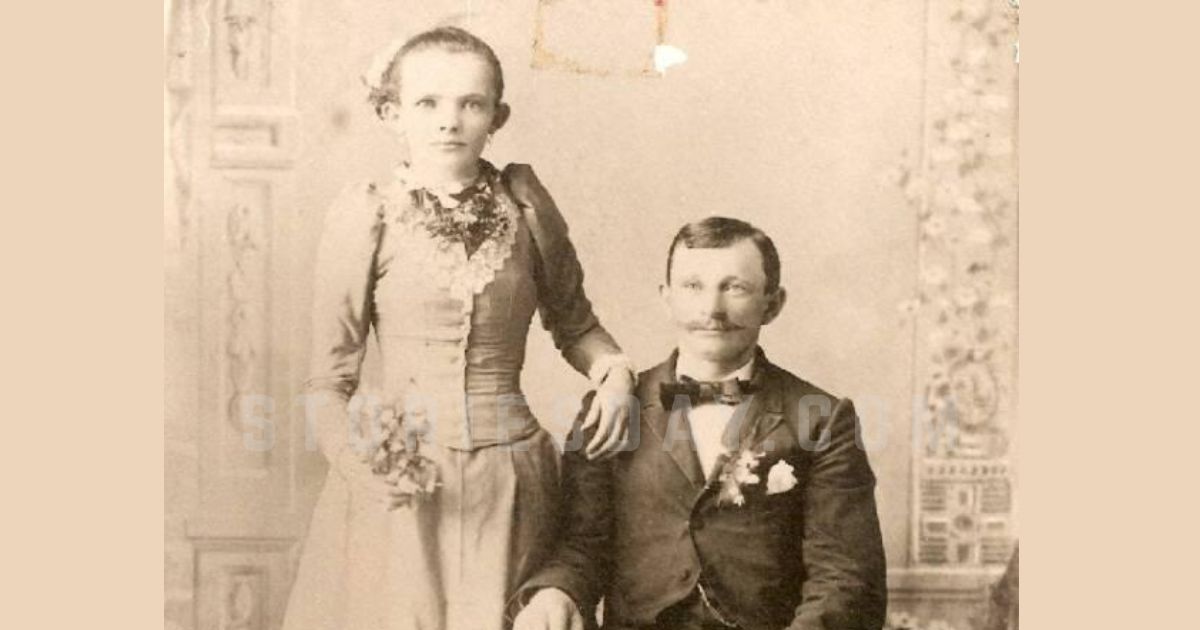
George Philip Gein is primarily remembered today as the father of Edward Theodore “Ed” Gein, the Wisconsin man whose crimes became one of the most notorious criminal cases in American history. Yet focusing only on his son can make George’s own life disappear behind a much larger and darker story.
Born in the nineteenth century, George lived through a very different America. His life included marriage, parenthood, various occupations, and years spent in rural Wisconsin. He died in 1940, more than a decade before Ed Gein’s crimes came to public attention.
That timeline is essential. George was not alive when his son’s criminal activities were uncovered in 1957. Therefore, a responsible account of his life should distinguish documented family history from later speculation and sensationalized interpretations.
Early Life and Family Background
George Philip Gein was born on August 4, 1873. Genealogical records identify his parents as Leonhart Ferdnand Dingeldein and Amelia Hermann. Some records place his birth in Coon Valley, Vernon County, Wisconsin, while other biographical databases list Bergen, Wisconsin. Because historical databases can differ, the discrepancy is worth acknowledging rather than presenting one location as certain.
His childhood took place during a period when Wisconsin was developing rapidly through agriculture, small businesses, trades, and expanding communities. Families commonly depended on practical occupations, physical labor, and local commerce.
Although relatively little public documentation survives about George’s childhood, his later working life suggests a connection to the practical, working-class economy of the region.
He eventually married Augusta Wilhelmine Lehrke. Their marriage became the foundation of the family that would later attract enormous public attention because of the actions of their younger son.
Marriage and Family Life
George married Augusta Wilhelmine Lehrke in 1900. Together they had two sons: Henry George Gein, born in 1901, and Edward Theodore Gein, born in 1906.
The family eventually became associated with the Plainfield area of Wisconsin, where George and Augusta raised their children.
Accounts of the household frequently describe Augusta as the more dominant influence within the family. She was known for strong religious beliefs and a strict approach to raising her sons. George, in contrast, is often portrayed as quieter and less authoritative.
Some later biographies also describe problems involving alcohol and conflict within the household. These claims appear in modern accounts, but they should be treated carefully because surviving documentation about George’s private behavior is limited compared with the enormous amount of material produced about Ed Gein decades later.
This distinction matters when discussing the family’s history. A biography should not automatically treat every later claim as an established historical fact.
George and Augusta as Parents
George and Augusta raised their children during a period when rural family life could be demanding. Work, financial uncertainty, religious expectations, and household responsibilities all shaped the environment.
Their sons eventually developed very different reputations. Henry remained largely outside the national spotlight, while Ed became notorious after his arrest in 1957.
The dramatic difference between the brothers is one reason the family’s earlier history has attracted so much attention.
Career and Working Life
George did not appear to have one narrowly defined lifelong profession. Historical accounts associate him with several occupations, reflecting the practical nature of employment during his era.
He has been described as a carpenter, tanner, firefighter, and grocery-store operator. These jobs indicate a working life built around practical skills and local employment rather than a prominent public career.
Carpentry, for example, was an important trade in growing communities. Tanning was also connected to the processing of animal hides, while operating a grocery business represented a completely different form of local commerce.
This variety is an important part of understanding George beyond his family name. He was not famous during his lifetime. His historical identity was largely that of a husband, father, and working man living in Wisconsin.
Later, agriculture became increasingly important to the family after their move to a rural property near Plainfield.
The Move to the Plainfield Farm
The Gein family eventually moved to a farm near Plainfield, Wisconsin. Historical accounts commonly describe the property as covering approximately 155 acres.
For the family, the farm represented both a home and a source of work. Rural properties of this kind required constant maintenance and physical labor, making family members part of the household’s economic activity.
The location later became infamous because of Ed Gein. However, George’s connection to the property needs to be placed within the correct timeline.
George died in 1940. Ed was not arrested until 1957.
That means the farm’s later association with criminal investigations developed long after George’s death. During George’s lifetime, it was simply the family home and agricultural property.
This distinction is especially important because modern retellings sometimes blend different periods of the family’s history together.
His Role as a Father
George was the father of Henry and Ed, but historical information about his parenting style is less extensive than information about Augusta’s influence.
Later accounts often emphasize Augusta because of her strict religious beliefs and the powerful influence she reportedly had over her sons. George is generally portrayed as a less dominant figure in the household.
Some sources describe him as struggling with alcohol. Other accounts discuss tension between George and other family members. However, claims about private family dynamics should be distinguished from facts supported by genealogical records.
There is also an important limitation when evaluating George’s relationship with Ed: George died when Ed was still alive but before the criminal events that would define Ed’s public reputation.
Consequently, it would be misleading to describe George as though he personally witnessed or responded to the later crimes.
The Two Sons
Henry, the older brother, was born in 1901. Ed followed in 1906.
The brothers remained connected to their family environment in Wisconsin. Henry died in 1944, only a few years after their father’s death.
Ed lived much longer and eventually became the focus of a major criminal investigation.
The different paths of the brothers have contributed to continued interest in their childhood and family circumstances. Nevertheless, a person’s family background alone cannot provide a complete explanation for later criminal behavior.
George Gein and the Family’s Later History
One of the most important facts about this biography is the chronology.
George died in 1940. Ed’s arrest occurred in 1957.
Therefore, George was already dead when investigators discovered the crimes that made the Gein name infamous.
This also means that modern discussions about George often involve a historical problem: information about him is frequently presented alongside events that happened after his lifetime.
A careful account should keep those periods separate.
George’s life belonged primarily to the late nineteenth and early twentieth centuries. His son’s criminal notoriety belonged to the postwar era.
The connection between the two is biological and historical, but it should not be confused with direct participation.
Henry’s Death
Henry died in 1944, four years after George.
The circumstances surrounding Henry’s death have been discussed extensively in later accounts because of uncertainty surrounding a brush fire and the family’s circumstances at the time. However, those events occurred after George had already died.
That timeline makes it impossible for George to have participated in or responded to Henry’s death.
Death and Burial
George Philip Gein died on April 1, 1940, at the age of 66.
Genealogical records identify Plainfield, Wisconsin, as his place of death and connect him with Plainfield Cemetery. Historical accounts commonly identify heart failure as the cause of death.
His death came during a period when Ed was still a young adult.
At the time, there was no reason for the wider American public to know the Gein family name. The criminal investigation that would eventually make Ed famous was still years away.
This is one of the clearest examples of how a person’s historical importance can change after death. George lived and died without experiencing the national notoriety that later surrounded his family.
How He Is Remembered Today
Today, the name is usually encountered in articles, documentaries, genealogical records, and entertainment productions connected to Ed Gein.
That means George’s modern identity is largely inherited from his family history.
Genealogy platforms preserve information about his birth, parents, marriage, children, and death. Entertainment databases have also included him in projects dealing with the Ed Gein case.
Modern media has created renewed interest in the Gein family. Dramatic portrayals of Ed’s life have encouraged audiences to look at other members of the family, including his parents.
However, entertainment portrayals are not substitutes for historical records.
A television series or documentary may simplify relationships, combine events, or emphasize particular characteristics for storytelling purposes. A factual biography should therefore use such portrayals as cultural context rather than definitive evidence.
What Is Documented and What Is Uncertain
Research into George Philip Gein is complicated by the limited amount of detailed primary biographical material available online.
Some information is relatively well established:
- He was born in 1873.
- He married Augusta Wilhelmine Lehrke.
- He had two sons, Henry and Edward.
- He lived and worked in Wisconsin.
- He eventually lived near Plainfield.
- He died in 1940.
- He was 66 years old at the time of his death.
Other details are less certain.
Birthplace
One genealogy source identifies Coon Valley, Wisconsin, while another database gives Bergen, Wisconsin. This kind of discrepancy is not unusual in historical records, especially when information has been reproduced across databases.
Personality and Family Relationships
Descriptions of George’s personality vary. Later biographies sometimes portray him as an alcoholic or as a relatively passive figure in the household.
Those descriptions may reflect historical testimony or later research, but they should not be presented with the same certainty as dates, names, and genealogical relationships.
Influence on Ed
It is tempting to search for a simple explanation for Ed Gein’s later crimes by examining his parents. However, there is no responsible basis for claiming that one parent alone caused his later behavior.
Family circumstances can be part of someone’s biography without providing a complete explanation for their adult actions.
This is especially important in historical writing because sensational explanations can easily become accepted as fact when repeated often enough.
Why His Story Still Matters
The historical value of George’s story is not that he was famous during his lifetime. He was not.
Instead, his story demonstrates how an ordinary person’s biography can become connected to major historical events through later generations.
George belonged to a family that initially had a relatively private existence in Wisconsin. His work, marriage, and parenting were ordinary aspects of early twentieth-century American life.
After his death, however, his younger son’s crimes changed the way the family was remembered.
That shift makes George an interesting subject for biographical research. His life provides context for understanding the Gein family before the events that made the name internationally recognizable.
It also reminds readers to distinguish a person’s own actions from those of relatives.
Frequently Asked Questions
Who was George Philip Gein?
He was a Wisconsin-born husband and father who was married to Augusta Wilhelmine Lehrke and had two sons, Henry and Edward Theodore Gein.
When was he born?
He was born on August 4, 1873. Available genealogical sources differ over the exact Wisconsin location associated with his birth.
Who was his wife?
His wife was Augusta Wilhelmine Lehrke, whom he married in 1900. They remained married until his death.
How many children did he have?
George and Augusta had two sons: Henry George Gein and Edward Theodore Gein.
When did he die?
He died on April 1, 1940, at the age of 66. Historical records associate his death with heart failure.
Conclusion
George Philip Gein lived a life that was largely private during his own era. He was born in Wisconsin in 1873, married Augusta Wilhelmina Lehrke, raised two sons, worked in several occupations, and eventually lived on a farm near Plainfield.
His historical reputation changed dramatically after the death of his son, Ed Gein, became associated with one of America’s most notorious criminal cases. Yet the timeline is crucial: George died in 1940, seventeen years before Ed’s arrest.
That fact provides the clearest way to understand his legacy. He should not be judged solely through events that happened after his lifetime.
The surviving genealogical and historical information offers a useful foundation for understanding his family, career, marriage, and place in Wisconsin history. Where the evidence becomes less certain, the most trustworthy approach is to acknowledge those limitations rather than turn speculation into fact.
Ultimately, his story is less about notoriety than about historical context. Understanding the man behind the family name helps create a more complete and responsible picture of the Gein family’s past.
