

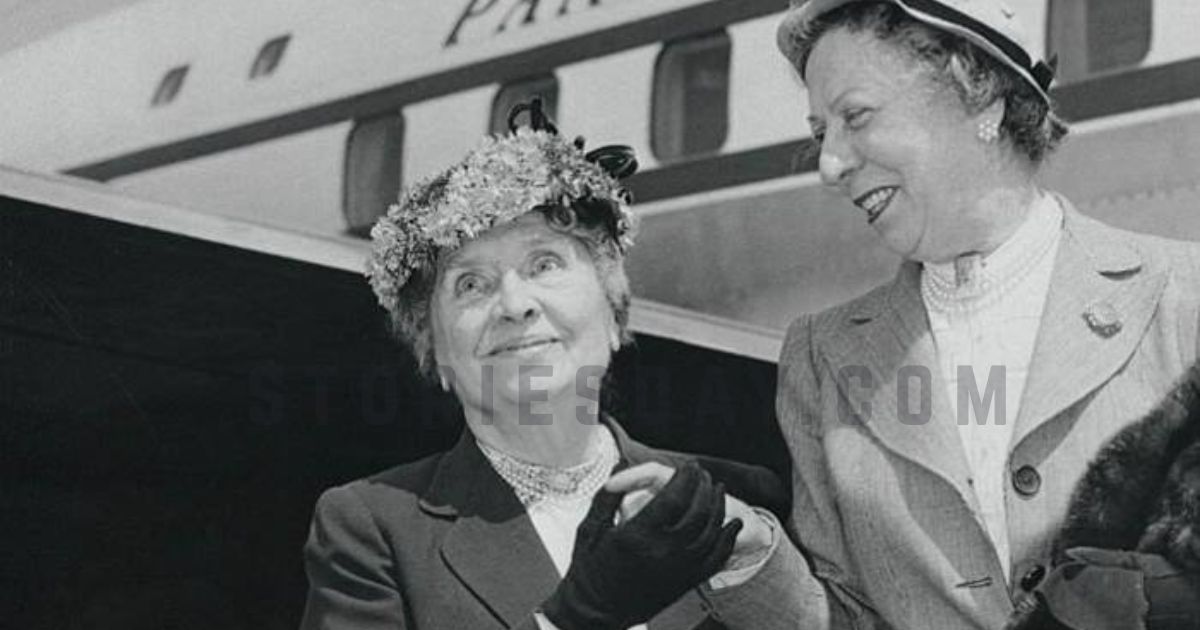
Helen Keller is remembered as one of the most influential deafblind figures in modern history. She became an author, lecturer, activist, and advocate for people with disabilities. Yet one episode from her remarkable life continues to surprise readers: her experience in an airplane cockpit.
So, did Helen Keller fly a plane? Yes, in a limited but very real sense. In 1946, Keller took control of an aircraft during a flight from Rome to Paris and operated the controls for approximately 20 minutes. She was not flying alone, however. A professional pilot remained in the cockpit, while her companion and interpreter, Polly Thomson, helped communicate instructions through touch.
The story is remarkable not because Keller somehow flew without assistance, but because she found a way to participate in an activity that depended heavily on sight, sound, communication, and physical coordination.
Understanding what actually happened also helps separate the documented 1946 event from later exaggerations and unrelated images that have circulated online.
The 1946 Flight
The best-known aviation episode in Keller’s life occurred in June 1946 during a journey from Rome to Paris.
A contemporary newspaper report described Keller taking control of a four-engine aircraft for about 20 minutes. The report identified the airplane as a Douglas Skymaster and explained that Keller occupied the cockpit while the regular pilot remained nearby.
This contemporary account is particularly important because it was published close to the time of the event. It provides a stronger historical foundation than modern social-media posts or articles that simply repeat the story without identifying their sources.
The flight was part of Keller’s extensive international work. By this stage of her life, she had already become an internationally recognized writer and advocate. Her travels frequently involved speaking about blindness, disability, education, and social opportunities for people with disabilities.
During the flight, she was given an opportunity to handle the controls.
That distinction is essential. Keller did not take off alone, navigate the aircraft across Europe, or land the plane independently. Instead, she controlled the aircraft for part of an already supervised flight.
In other words, the answer to did Helen Keller fly a plane depends partly on how the word “fly” is being defined.
If flying means independently completing an entire flight from takeoff to landing, then no. If it means physically controlling an aircraft while airborne under a pilot’s supervision, then yes.
The latter is what the historical record supports.
How Helen Keller Controlled the Aircraft
The obvious question is how someone who could neither see nor hear could receive instructions inside an airplane.
The answer involved touch.
Keller had spent her entire life developing alternative ways of communicating and receiving information. Because she could not depend on visual or auditory information, tactile communication became extremely important.
During the 1946 flight, Polly Thomson acted as the communication link between Keller and the pilot.
The pilot could give instructions, and Thomson could communicate those instructions to Keller through touch. Keller could then respond by moving the aircraft’s controls.
This arrangement did not eliminate the need for a trained pilot. Instead, it created an accessible communication system that allowed Keller to understand what was happening and participate in controlling the aircraft.
The physical sensations produced by an aircraft also mattered. When a person moves an aircraft’s controls, they can feel resistance and movement through their hands. Keller was highly accustomed to receiving information through physical contact, making touch a particularly important part of her interaction with the controls.
This is one reason the historical story is more interesting than the simple headline.
The achievement was not a case of Keller somehow ignoring the limitations imposed by her deafblindness. She and the people around her adapted the communication process so that she could participate.
Polly Thomson’s Important Role
Any accurate explanation of Keller’s flight must include Polly Thomson.
Thomson was one of Keller’s closest companions and interpreters for many years. After Anne Sullivan’s death in 1936, Thomson became an especially important figure in Keller’s daily life and public work.
Thomson’s role during the flight was to help Keller receive the pilot’s instructions.
This does not mean Thomson secretly flew the aircraft for Keller. Keller was physically handling the controls. Thomson’s job was communication.
The distinction is important because some simplified versions of the story can make the event sound as though Keller was completely independent inside the cockpit. The contemporary account gives a different and more realistic picture.
The flight involved cooperation between three essential elements:
- The pilot, who remained responsible for the aircraft and provided instructions.
- Polly Thomson, who communicated information through touch.
- Helen Keller, who physically operated the aircraft’s controls.
Seen this way, the flight becomes an example of accessible communication and collaboration rather than an implausible story of a person flying an aircraft without assistance.
It also reflects something that appeared repeatedly throughout Keller’s life: she often achieved extraordinary things with the help of people who developed effective ways to communicate with her.
Was It a Solo Flight?
No. Keller did not conduct a solo flight.
This is perhaps the most important qualification when discussing the story.
A solo flight normally means that the pilot is operating the aircraft without another pilot present who is responsible for the flight. That is not what happened in 1946.
Keller was a passenger who was invited into the cockpit and allowed to take control while the aircraft was already airborne.
The regular pilot remained present, and Thomson helped Keller understand his instructions.
Therefore, describing Keller simply as “a pilot” would create an inaccurate impression.
A more precise description is that she took control of an aircraft and flew it under supervision for approximately 20 minutes.
That wording recognizes both parts of the story: she genuinely operated the controls, but she did so within a supervised flight.
This distinction also answers why different versions of the story sometimes appear contradictory. One article might say that Keller “flew a plane,” while another might emphasize that she was not an independent pilot.
Both statements can be reconciled when the context is explained.
Helen Keller and Aviation Before 1946
The 1946 flight was not the only time Keller was associated with airplanes.
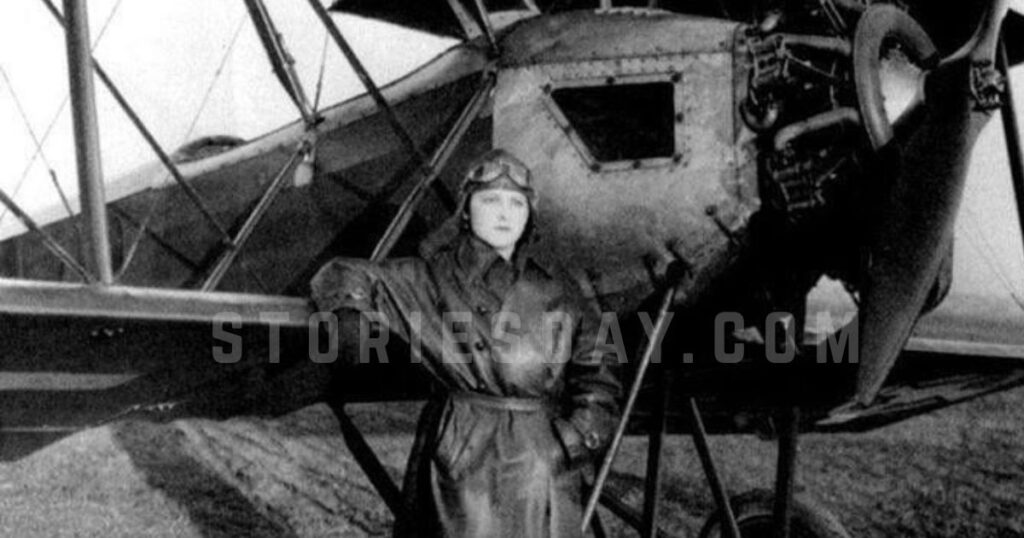
Earlier in her life, Keller appeared in an aviation sequence in the 1919 silent film Deliverance. The film was a fictionalized account of her life and should not be treated as documentary evidence that she was actually piloting an aircraft at that time.
This distinction is particularly important because images and clips from historical films can easily become detached from their original context.
The Library of Congress identifies Deliverance as a fictionalized film about Keller. Consequently, scenes from the production should not be used as proof of events in Keller’s real life.
The 1946 episode is different because there is a contemporary newspaper report describing the actual flight.
This gives researchers a useful way to separate two frequently confused stories:
1919: Keller appeared in an airplane-related scene in a fictional film.
1946: A contemporary report documented Keller taking control of an aircraft during a real flight.
The difference may seem small, but it is essential for responsible historical writing.
Why the Story Became So Famous
The story has all the elements of an extraordinary historical anecdote.
Helen Keller was already internationally famous. She had become deafblind as a young child and nevertheless developed a remarkable career as a writer, speaker, and advocate.
An airplane, meanwhile, represents technology that depends heavily on communication and sensory information.
Putting those two subjects together naturally creates a fascinating story.
The question did Helen Keller fly a plane became even more compelling as the story spread online because modern readers often imagine the event without its historical context.
A headline can make it sound as though Keller climbed into an aircraft, took off, and flew alone across Europe.
That is not what the evidence indicates.
The actual event was more specific: she was already aboard an aircraft, entered the cockpit, received tactile instructions through Thomson, and operated the controls while the pilot remained present.
The real story is still extraordinary. It simply does not require exaggeration.
Separating Fact From Internet Myths
Historical figures frequently become the subject of internet myths because old photographs, newspaper articles, films, and modern retellings become mixed together.
Keller’s story is a good example.
One common confusion involves the 1919 film Deliverance. Because the film contains Keller in an airplane-related scene, viewers may assume that the footage proves she was piloting an airplane decades before the documented 1946 flight.
It does not.
The film was fictionalized, meaning that scenes were created for the production rather than filmed as documentary records of Keller’s everyday life.
Another problem is the use of dramatic language such as “Helen Keller secretly became a pilot” or “Helen Keller flew a plane completely alone.”
Those descriptions go beyond the evidence.
The most reliable version of the story is comparatively straightforward:
- Keller was traveling from Rome toward Paris in 1946.
- She entered the cockpit.
- She took control of the aircraft while it was airborne.
- Thomson communicated instructions through touch.
- The regular pilot remained present.
- Keller controlled the aircraft for approximately 20 minutes.
This version is remarkable enough on its own.
What Made the Flight Possible?
The flight was possible because Keller had developed sophisticated ways of receiving information through touch.
Her education had already demonstrated how effectively tactile communication could work.
Anne Sullivan famously taught Keller language by spelling words into her hand. Over time, Keller became an accomplished communicator who could receive information through touch and respond verbally and in writing.
Polly Thomson’s involvement continued this approach.
The flight therefore did not depend on Keller suddenly acquiring an ability she had never used before. Instead, it applied a communication system she had relied upon throughout her life to a new environment.
The cockpit itself also provided physical feedback.
A person operating an aircraft can feel the controls moving and can sense changes in the aircraft’s motion. Keller’s lack of sight and hearing did not prevent her from feeling those physical changes.
However, that does not mean she could have safely conducted an entire modern flight without assistance.
Aviation involves far more than physically moving a control. Pilots must interpret instruments, communicate with air traffic services, monitor the aircraft, make navigational decisions, respond to emergencies, and manage changing conditions.
The 1946 experience should therefore be understood as a brief, supervised period of control rather than evidence that Keller could independently perform every task associated with professional piloting.
Why the Flight Was Significant
The significance of Keller’s flight goes beyond aviation.
Throughout her life, she challenged assumptions about deafblindness and disability.
At a time when disabled people were frequently excluded from education, employment, travel, and public life, Keller became a highly visible example of what could be accomplished when barriers were addressed.
Her flight illustrates that principle particularly well.
Nobody removed her deafblindness. Nobody pretended she could suddenly see or hear.
Instead, communication was adapted.
That is an important distinction.
Accessibility is often about finding another way to transfer information. Keller’s experience demonstrates this clearly: the pilot’s spoken instructions could reach her through tactile communication, and she could respond through the physical controls of the aircraft.
Her experience also shows why assistance should not automatically be confused with dependence.
Thomson’s help was essential, but Keller was still the person handling the controls.
Many achievements in life involve cooperation. The presence of another person does not erase the contribution of the person receiving assistance.
The Broader Legacy of Helen Keller
The airplane story represents only a small part of Keller’s life.
She became an author and public speaker whose work reached audiences around the world. She advocated for improved opportunities for blind people and supported broader social causes.
Her career challenged the idea that blindness and deafness necessarily prevented intellectual or professional achievement.
That context makes the 1946 flight more meaningful.
It was not an isolated publicity stunt disconnected from her life. It fit a larger pattern in which Keller participated in activities that challenged assumptions about disability.
She traveled internationally, addressed audiences, met political leaders, wrote extensively, and worked on behalf of organizations supporting people with disabilities.
The aircraft episode is memorable because it is visually and technically unusual. But the deeper significance comes from the same principle that shaped much of Keller’s career: people should not be defined entirely by the limitations others assume about them.
What the Historical Record Actually Supports
When evaluating did Helen Keller fly a plane, it is useful to distinguish the central fact from the exaggerated versions.
The historical record supports the following:
- Keller took control of an aircraft during a 1946 flight.
- The aircraft was identified in the contemporary report as a Douglas Skymaster.
- The flight was traveling from Rome toward Paris.
- She reportedly operated the controls for approximately 20 minutes.
- Polly Thomson helped communicate instructions through touch.
- The regular pilot remained present.
- Keller did not conduct a solo takeoff and landing.
- The 1919 airplane footage from Deliverance belongs to a fictionalized film and should not be confused with the 1946 event.
This is a much more useful account than simply repeating that Keller “flew a plane.”
It gives readers the context needed to understand what actually happened.
Frequently Asked Questions
Did Helen Keller really fly an airplane?
Yes. A contemporary 1946 newspaper report documented Keller taking control of a four-engine aircraft during a flight from Rome to Paris for approximately 20 minutes.
Could Helen Keller see or hear while flying?
No. Keller was deafblind. She relied on tactile communication to receive instructions and on physical sensations from the aircraft’s controls.
Who helped Helen Keller during the flight?
Polly Thomson, Keller’s longtime companion and interpreter, communicated instructions to her through touch while the pilot remained in the cockpit.
Did Helen Keller fly a plane alone?
No. The flight was supervised by the aircraft’s pilot. Keller briefly operated the controls rather than independently completing a flight.
What type of aircraft did Helen Keller control?
The contemporary report described the aircraft as a four-engine Douglas Skymaster.
Conclusion
So, did Helen Keller fly a plane? The evidence says yes, but with an important qualification.
In 1946, Keller took control of a Douglas Skymaster during a flight from Rome to Paris and operated its controls for approximately 20 minutes. She was assisted by Polly Thomson, who communicated instructions through touch, while the regular pilot remained present.
It was not a solo flight, and Keller did not independently perform every stage of aviation. Nevertheless, she genuinely controlled an aircraft while it was airborne.
The story becomes even more impressive when understood in its proper context. Keller did not overcome deafblindness by pretending it was not there. She used communication, adaptation, cooperation, and determination to participate in an experience that depended heavily on senses she did not possess.
That is what makes the 1946 flight worth remembering. It was not merely a sensational aviation anecdote. It was another example of Helen Keller challenging assumptions about what a person with a disability could accomplish.
