

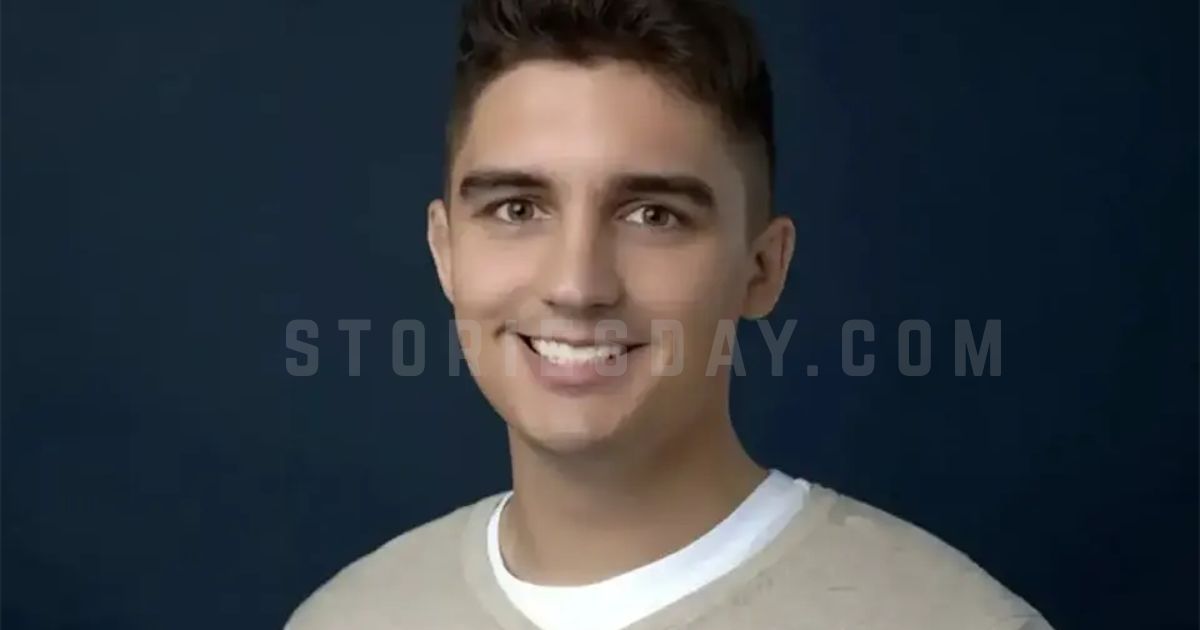
When the name Benjamin Erickson appeared in reports about the Brown University shooting investigation, it quickly became the subject of intense public interest. Early coverage connected him to the investigation after authorities detained him as a person of interest. However, later developments significantly changed the picture.
Erickson was a 24-year-old Wisconsin man and former U.S. Army infantryman. He was detained in Rhode Island during the initial investigation into the December 2025 shooting at Brown University. Authorities later released him after determining that the evidence pointed elsewhere.
That distinction matters. Being detained or described as a person of interest does not establish that someone committed a crime. In this case, later investigative findings made clear that Erickson was not the person responsible for the Brown University attack.
This article examines his publicly reported background, military service, connection to Brown University, the circumstances surrounding his detention, and what investigators established afterward.
Who Is Benjamin Erickson?
Benjamin Erickson is a Wisconsin native and former U.S. Army infantryman who came into the national spotlight because of an investigative development following the Brown University shooting.
According to contemporary reporting, Erickson was 24 years old when authorities detained him in Rhode Island. His name emerged as investigators worked to identify the person responsible for the shooting at Brown University in Providence.
The incident took place on December 13, 2025, at Brown University’s Barus & Holley building. Two students were killed and nine others were injured.
During the early stages of the investigation, law enforcement detained Erickson at a hotel in Coventry, Rhode Island. He was described in news reports as a person of interest rather than someone who had been formally charged with the shooting.
That distinction became increasingly important as the investigation developed.
Authorities eventually released him after obtaining additional evidence. Brown University later clarified that the individual who had been detained was not the shooter and that there was no continuing basis to regard him as a person of interest.
As a result, descriptions of Erickson should focus on his actual role in the investigation rather than repeating early assumptions that were later disproved.
His Early Background and Education
Public reporting has described Erickson as originally from Wisconsin. His background attracted attention partly because investigators were examining whether he had a connection to Brown University.
Information attributed to a LinkedIn profile indicated that he had pursued higher education and had an interest in psychology. Reports also said that his educational plans included Brown University after his military service.
Those details helped investigators establish his movements and background during an extremely fast-moving investigation.
However, an educational connection does not establish involvement in a criminal case. It is important to separate biographical information from investigative suspicion, particularly when discussing a person who was ultimately released.
The circumstances also demonstrate why online profiles can be misleading when taken out of context. A professional profile may establish someone’s education or employment history, but it cannot independently establish what someone did at a particular time or whether they were involved in an offense.
For readers researching Benjamin Erickson, this distinction is especially important because much of the initial public interest came from reports published while investigators were still working with incomplete information.
His U.S. Army Career
One of the better-documented aspects of Erickson’s background is his service in the U.S. Army.
The Army confirmed that Benjamin W. Erickson served in the Regular Army from May 2021 until November 2024. He served as an infantryman and left the military at the rank of specialist.
Reports based on Army information said he had no deployments during his service.
His military history became a prominent part of news coverage because of the nature of the Brown investigation. Some reports also described aspects of his military training and duties.
According to CNN reporting cited by other outlets, his professional profile indicated that he served as a rifleman and completed sniper-related training. His reported duties also included security work and participation in funeral ceremonies at Arlington National Cemetery.
These facts describe his professional background. They should not, however, be interpreted as evidence that he participated in the Brown University shooting.
Military experience is not evidence of criminal conduct. In a responsible biography, it should be presented as one element of his employment history rather than as a suggestion of wrongdoing.
His Time in the Army
Based on information attributed to military officials, the reported timeline is:
- May 2021: Entered Regular Army service.
- Military occupation: Infantryman.
- Service: Regular Army.
- November 2024: Left military service.
- Final reported rank: Specialist.
- Deployments: None reported by the Army.
These details provide useful context for understanding his background without drawing conclusions that the available evidence does not support.
His Connection to Brown University
The Brown University connection was one of the reasons investigators examined Erickson during the initial response to the shooting.
Reports based on his professional profile indicated that he had pursued studies related to psychology and had an association with Brown University after leaving the military.
Because the shooting occurred on the Brown campus, investigators needed to determine the relevance of any connection between Erickson and the university.
That process appears to have been part of a broader effort to establish who had access to the campus, who had relevant connections, and where potential persons of interest were located.
Importantly, having attended, planned to attend, or otherwise having a connection with a university does not demonstrate involvement in a violent incident.
The later release of Erickson made that distinction particularly significant.
Why Was He Detained?
The precise investigative details surrounding every aspect of Erickson’s detention were not publicly disclosed.
What is clear from contemporary reporting is that law enforcement developed information that led investigators to him during the search for the Brown University shooter.
Authorities detained him at a hotel in Coventry, Rhode Island, while they investigated his potential connection to the case.
At that point, investigators were still gathering evidence. Being detained allowed authorities to question and investigate a person while determining whether the available evidence supported further action.
This is different from an arrest followed by criminal charges.
The terminology used by news organizations sometimes created confusion because headlines used phrases such as “person of interest” while readers interpreted that label as meaning “suspect” or “shooter.”
Those terms should not be treated as interchangeable.
What Happened After His Detention?
The investigation changed significantly after Erickson was detained.
Authorities continued evaluating the evidence and ultimately released him. Officials said the investigation had developed in a different direction.
Brown University later issued a clarification indicating that the person who had been detained was not the shooter and that there was no basis to continue considering that individual a person of interest.
This was a major development because it effectively separated Erickson from responsibility for the attack.
For that reason, articles or social-media posts that describe him simply as the Brown University shooter are inaccurate.
A more precise description is that he was briefly detained during the early investigation and later released.
That wording reflects the sequence of events without turning an early investigative lead into an unsupported accusation.
The Person Eventually Identified in the Brown Shooting
The investigation ultimately focused on a different individual.
Authorities later identified Claudio Manuel Neves Valente as the person responsible for the Brown University shooting.
According to the Rhode Island Attorney General’s Office, Valente was 48 years old and had previously been a graduate student at Brown University.
Investigators eventually located him in New Hampshire. Authorities said he died from a self-inflicted gunshot wound before he could be taken into custody.
The Rhode Island Attorney General’s Office said an arrest warrant had been issued charging Valente with two counts of murder and numerous additional felony offenses related to the attack.
Brown University also confirmed information about Valente’s previous connection with the university and said he had attended its Graduate School in the early 2000s.
This later identification is critical to understanding why Erickson should not be described as the perpetrator.
The Investigation’s Changing Picture
The sequence demonstrates how major criminal investigations can evolve:
- A shooting occurred at Brown University.
- Investigators began searching for the person responsible.
- Authorities developed information involving Erickson.
- Erickson was detained in Rhode Island.
- Investigators continued evaluating evidence.
- Erickson was released.
- Authorities shifted their focus to another individual.
- Claudio Manuel Neves Valente was eventually identified as responsible.
This timeline explains why early reporting about Benjamin Erickson should always be read alongside later updates.
Why the Distinction Matters
The story illustrates a broader problem with breaking-news reporting: early information can change rapidly.
When investigators are responding to a serious crime, they may have only fragments of information. A person can become relevant to an investigation because of their location, relationships, digital records, professional history or other circumstances.
None of those factors automatically establish guilt.
Person of Interest
A person of interest is generally someone investigators want to identify, question or investigate because they may have relevant information or a possible connection to a case.
The term does not mean the person has been charged.
Suspect
A suspect is someone authorities believe may have committed an offense. The term is stronger than “person of interest,” although it still does not establish guilt.
Defendant
A defendant is someone formally accused in a criminal proceeding.
Convicted Person
A person becomes convicted only after being found guilty through the applicable legal process.
In the case of Benjamin Erickson, the available public record does not support describing him as the perpetrator of the Brown University shooting.
What Is Known About His Current Status?
The most important publicly established update is that Erickson was released after investigators determined that he was not the person responsible for the Brown University shooting.
There has been substantial interest in his name because of the initial detention, but that attention should not be confused with evidence of continuing involvement in the case.
Public reporting has focused much more heavily on the Brown University investigation itself than on developments in Erickson’s personal life following his release.
That means claims about his current employment, residence, relationships or other private circumstances should be approached carefully unless supported by reliable, recent sources.
There is also a broader identity issue to consider. Benjamin Erickson is not a unique name, and people with the same or similar names appear in professional and public records.
A reliable profile should therefore avoid combining information about different individuals simply because they share a name.
Understanding the Brown University Shooting in Context
The Brown University shooting had a profound impact on the university community.
Two students, Ella Cook and MukhammadAziz Umurzokov, were killed. Nine other students were injured.
The attack led to an extensive law-enforcement response and widespread concern throughout Providence and the Brown campus.
In the months following the shooting, Brown University turned significant attention toward remembrance and recovery.
The university held a memorial service for the two students in February 2026, and later announced plans for a permanent memorial and changes involving the Barus & Holley building.
Those developments form an important part of the broader story because they show how the university moved from the immediate emergency response toward long-term remembrance and recovery.
Against that background, the episode involving Benjamin Erickson represents one stage of an investigation that was initially uncertain but eventually produced a different identification.
What Readers Should Take Away
Several facts stand out when reviewing the available reporting:
- Erickson was a 24-year-old Wisconsin man when he came to public attention.
- He previously served in the U.S. Army.
- His military service ended in 2024.
- He was detained during the initial Brown University shooting investigation.
- He was not charged with the shooting.
- Authorities later released him.
- Brown University clarified that the released individual was not the shooter.
- Investigators later identified Claudio Manuel Neves Valente as the person responsible.
- His military and educational background should not be treated as evidence of criminal conduct.
The most responsible approach is therefore to discuss Erickson’s role in chronological terms rather than relying on early headlines.
Frequently Asked Questions
Who is Benjamin Erickson?
Benjamin Erickson is a Wisconsin native and former U.S. Army infantryman who became publicly known after being detained during the initial investigation into the Brown University shooting in December 2025.
Was Benjamin Erickson the Brown University shooter?
No. Authorities later identified Claudio Manuel Neves Valente as the person responsible for the shooting. Erickson was released after investigators determined that the evidence pointed elsewhere.
Did Benjamin Erickson serve in the military?
Yes. The U.S. Army confirmed that he served as an infantryman in the Regular Army from May 2021 to November 2024 and left the service as a specialist.
Why did authorities detain him?
He was detained after investigators developed information connecting him to the early investigation. Authorities subsequently reviewed additional evidence and released him.
Was Benjamin Erickson charged with a crime related to the Brown shooting?
No. Publicly available reporting does not establish that he was charged with the Brown University shooting. His detention was part of the early investigative process, and authorities later cleared him of that connection.
Conclusion
The story of Benjamin Erickson is best understood as an example of how information can change during a fast-moving criminal investigation.
He was identified in early reporting as a person of interest after being detained during the search for the Brown University shooter. His Wisconsin background, Army service and reported connection to Brown University attracted significant attention, but those facts did not establish responsibility for the attack.
Authorities ultimately released him, and Brown University confirmed that the detained individual was not the shooter. Investigators later identified Claudio Manuel Neves Valente as the person responsible.
For anyone researching Benjamin Erickson, the key is to distinguish early investigative developments from the final findings. Doing so provides a more accurate account and avoids turning an initial lead into a lasting but unsupported allegation.
