

Learning software development has never been easier in terms of access to resources, yet many aspiring developers struggle to make consistent progress. The problem is rarely a lack of tutorials or courses. More often, it is the absence of a clear path that connects foundational knowledge to practical skills and career goals.
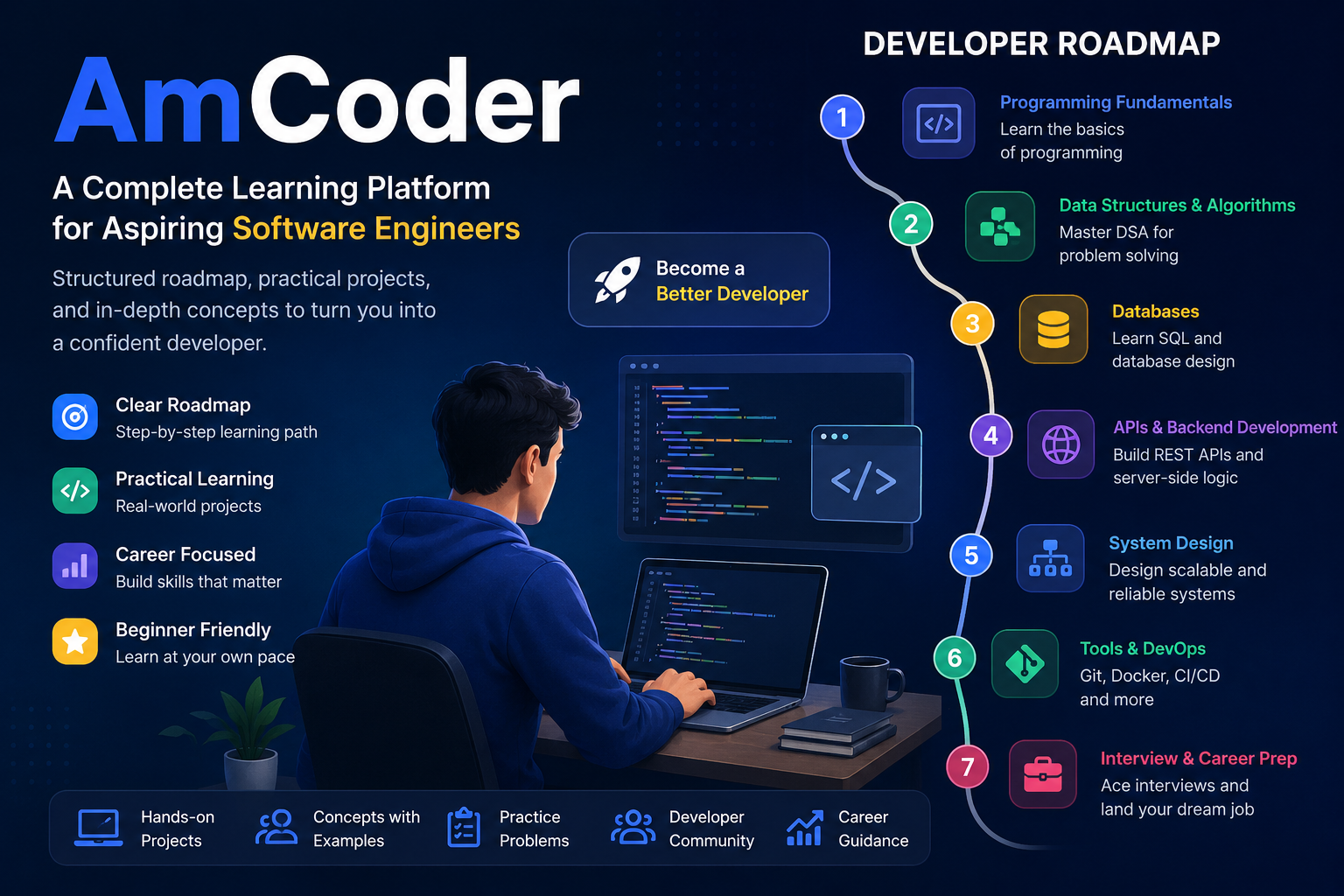
AmCoder addresses this challenge by organizing software engineering education into a structured roadmap. Instead of encouraging learners to jump between unrelated technologies, it emphasizes mastering core concepts before moving to advanced topics. This approach reflects how experienced engineers develop expertise over time: by building knowledge layer by layer.
What Is AmCoder?
AmCoder is a developer-focused learning platform designed around a structured educational roadmap. Rather than presenting programming as a collection of isolated lessons, it treats software engineering as a connected discipline where each skill supports the next.
The platform’s central idea is simple: learners progress more effectively when they understand what to learn, why they are learning it, and how each topic fits into professional software development.
This focus on progression is particularly valuable for beginners, who often encounter conflicting advice about programming languages, frameworks, and career paths.
Why Developer Roadmaps Matter
Many learners start with enthusiasm but become overwhelmed by the number of available resources. A roadmap reduces this confusion by creating a sequence that prioritizes foundational skills before specialized knowledge.
For example, understanding data structures and algorithms provides benefits that extend far beyond coding interviews. These concepts influence application performance, system design decisions, and problem-solving strategies.
Likewise, learning database fundamentals before building complex applications helps developers understand how information is stored, retrieved, and managed efficiently.
A roadmap creates context. Instead of learning isolated tools, developers understand how technologies work together within real-world systems.
The Learning Philosophy Behind AmCoder
A common mistake among new developers is focusing exclusively on tools and frameworks. While modern technologies are important, they change regularly. Core engineering principles remain valuable throughout a developer’s career.
The philosophy behind AmCoder places strong emphasis on fundamentals, including:
Problem Solving
Programming is fundamentally about solving problems. Syntax can be learned relatively quickly, but the ability to analyze requirements, break down challenges, and create effective solutions develops through practice.
Computer Science Foundations
Topics such as algorithms, data structures, complexity analysis, and software architecture provide the framework for understanding modern systems.
Practical Application
Knowledge becomes meaningful when applied. Building projects helps learners connect theory with implementation and reveals gaps in understanding that tutorials often hide.
Continuous Learning
Technology evolves constantly. Developers who understand foundational concepts can adapt more easily to new languages, frameworks, and industry trends.
Core Areas of Study
A structured roadmap typically covers several essential domains that contribute to professional software engineering competence.
Programming Fundamentals
Every developer begins with basic programming concepts.
These include:
- Variables and data types
- Functions and methods
- Control structures
- Error handling
- Object-oriented principles
Mastering these fundamentals creates the foundation for more advanced development work.
Data Structures and Algorithms
These topics help developers write efficient and scalable software.
Key concepts include:
- Arrays
- Linked lists
- Stacks and queues
- Trees
- Graphs
- Sorting algorithms
- Search techniques
Understanding these concepts improves both technical interview performance and day-to-day engineering work.
Database Management
Applications depend on reliable data storage and retrieval.
Developers benefit from understanding:
- Relational databases
- SQL queries
- Database normalization
- Indexing
- Data modeling
Strong database skills often distinguish competent developers from beginners.
APIs and Backend Development
Modern software systems communicate through application programming interfaces.
Learning backend development introduces concepts such as:
- RESTful services
- Authentication
- Authorization
- Server architecture
- Data processing
These skills are critical for creating functional and scalable applications.
System Design
As developers gain experience, understanding system architecture becomes increasingly important.
Topics often include:
- Scalability
- Caching
- Distributed systems
- Load balancing
- Microservices
System design knowledge helps engineers build applications capable of supporting large numbers of users and requests.
From Fundamentals to Real Projects
One of the most important aspects of developer education is applying knowledge through projects.
A learner may understand concepts individually but still struggle to build complete applications. Real projects bridge this gap by requiring multiple skills to work together.
A web application, for example, combines:
- Frontend development
- Backend logic
- Database integration
- Authentication
- Deployment
Working through these challenges develops practical problem-solving skills that employers value highly.
Projects also create tangible evidence of competence. A strong portfolio demonstrates abilities more effectively than course completion certificates alone.
Preparing for Technical Interviews
Many software engineering candidates focus exclusively on interview preparation without building a solid foundation first. This often leads to short-term memorization rather than genuine understanding.
A structured learning path naturally supports interview readiness because it develops the knowledge that interviewers frequently evaluate.
Important areas include:
Algorithmic Thinking
Interview questions often assess how candidates approach problems rather than whether they immediately know the correct answer.
Code Quality
Readable, maintainable code reflects professional engineering practices.
System Design Discussions
Senior-level interviews frequently explore architectural decision-making and scalability considerations.
Communication Skills
Engineers must explain technical concepts clearly. Practicing this skill improves interview performance and workplace collaboration.
Advantages of a Structured Learning Path
A roadmap-based approach offers several practical benefits.
Reduced Decision Fatigue
Learners spend less time deciding what to study next and more time learning.
Better Knowledge Retention
Concepts learned in logical sequence are easier to understand and remember.
Improved Confidence
Progress becomes measurable when learners can see how each completed topic contributes to larger goals.
Career Alignment
A structured curriculum helps learners focus on skills relevant to professional software development rather than temporary trends.
Who Can Benefit Most?
The structured approach promoted by AmCoder can benefit several groups.
Complete Beginners
Those with no programming background often need guidance on where to start and what to prioritize.
Self-Taught Developers
Developers who learned through scattered tutorials may discover gaps in their understanding of foundational concepts.
Computer Science Students
Students can use a roadmap to supplement academic learning with practical skills and industry-focused knowledge.
Career Changers
Professionals transitioning into technology often benefit from a clear path that reduces uncertainty and accelerates skill development.
Challenges and Considerations
No learning platform can guarantee success on its own.
Progress ultimately depends on consistent effort, deliberate practice, and patience. A roadmap provides direction, but learners must actively engage with the material.
Some common challenges include:
- Inconsistent study habits
- Fear of difficult topics
- Excessive focus on tutorials without building projects
- Comparing progress with others
Recognizing these obstacles helps learners develop healthier expectations and more sustainable learning habits.
The Future of Developer Education
Software development continues to evolve alongside advances in artificial intelligence, cloud computing, cybersecurity, and distributed systems.
As technology becomes more complex, structured learning frameworks are likely to become increasingly valuable. Developers need more than isolated technical knowledge; they need a coherent understanding of how systems operate and how different technologies interact.
The most successful educational approaches will continue emphasizing fundamentals while adapting to changing industry requirements.
Roadmap-driven learning reflects this balance by combining timeless engineering principles with practical modern skills.
Conclusion
AmCoder represents an approach to developer education built around clarity, progression, and strong technical foundations. Instead of encouraging learners to chase every new trend, it focuses on the skills that form the backbone of professional software engineering.
By emphasizing programming fundamentals, data structures, databases, backend development, system design, and project-based learning, the platform provides a framework that supports long-term growth. For aspiring developers seeking a clear path through an increasingly complex technology landscape, a structured roadmap offers both direction and confidence.
The value of any learning journey ultimately depends on consistent practice and real-world application. A roadmap can provide guidance, but meaningful progress comes from building, experimenting, solving problems, and continuously improving over time.
Frequently Asked Questions
What is AmCoder?
AmCoder is a developer learning platform that organizes software engineering education through a structured roadmap covering foundational and advanced technical topics.
Is AmCoder suitable for beginners?
Yes. Its roadmap-based approach helps beginners understand what to learn first and how different concepts connect throughout the learning process.
Does AmCoder focus only on coding?
No. It covers broader software engineering concepts, including databases, APIs, system design, version control, and problem-solving methodologies.
Why are developer roadmaps important?
Roadmaps provide structure, reduce confusion, and help learners build skills in a logical sequence that reflects real-world software development.
Can a structured roadmap improve career readiness?
A well-designed roadmap helps learners develop foundational knowledge, practical experience, and problem-solving abilities that are relevant to professional software engineering roles.
